

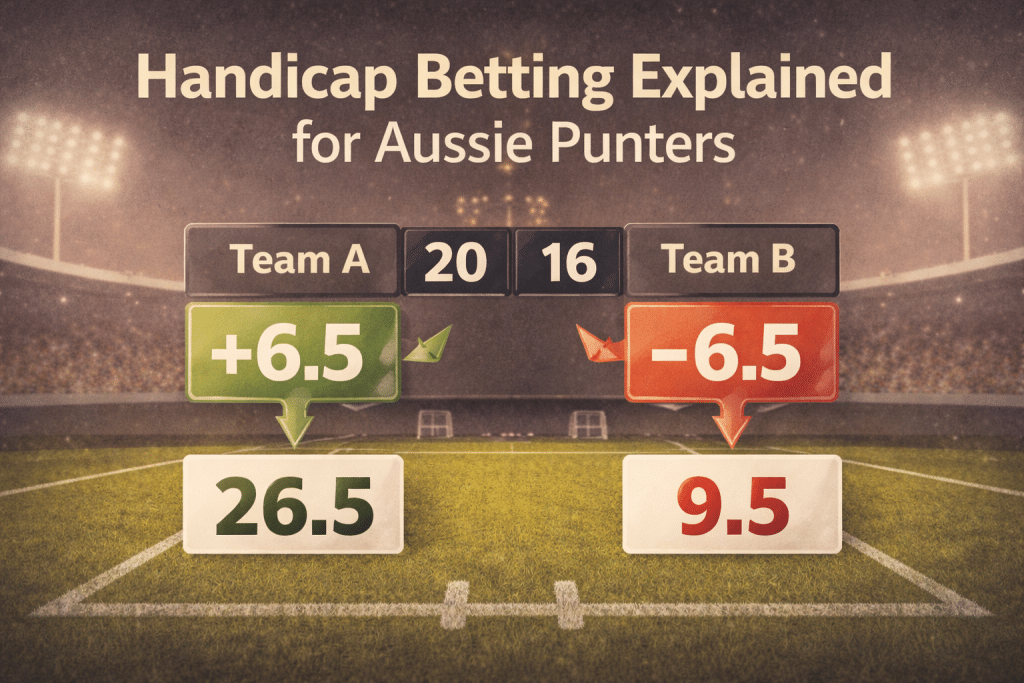
Handicap betting usually shows up right around the point where a bet stops being obvious. You look at a matchup, see a plus or minus number next to a team, and suddenly you’re not quite sure what you’re being asked to back anymore. The team you like might still be the favourite, but now it feels like they need to do more than just win.
That confusion is pretty common, especially for Australian punters who are used to thinking in terms of margins rather than complicated market names. A side can win the game and still let you down, while the other can lose and somehow be the right pick. Until that clicks, handicap markets can feel like something you’d rather skip.
This page is here to make handicap betting feel readable instead of technical. We’re not getting into where to bet or how to place one. The focus is on how these markets actually work, the different handicap formats you’ll see, and what result needs to land for your bet to be settled. By the end, things like Asian handicap, no-draw handicap, and 3-way handicap should make sense in plain terms, without feeling like extra homework.
What Is Handicap Betting?
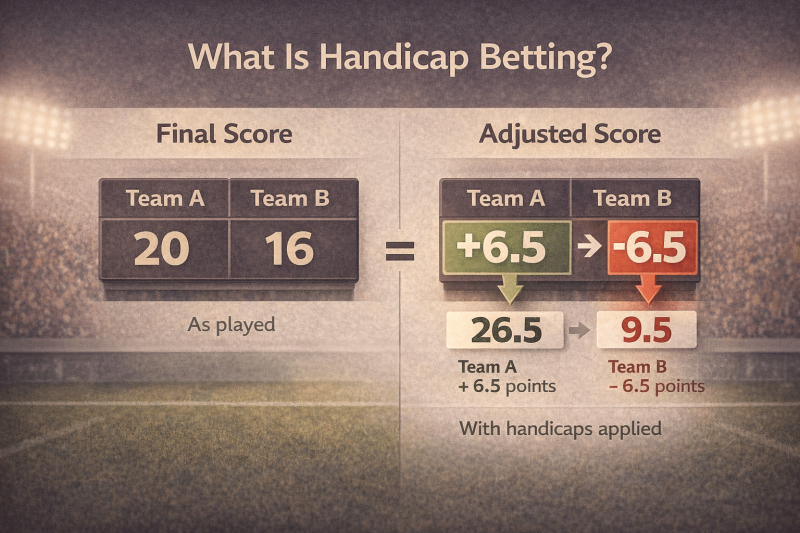
Handicap betting is about changing the starting point of a game for betting purposes. One side is given a head start, the other starts behind, and the bet is settled after that adjustment is applied to the final score.
It exists for one simple reason. Not every matchup is a fair contest, and betting purely on who wins does not always tell you much about how a game actually plays out.
Why Handicap Betting Exists
When one team is clearly stronger, backing them to win can feel unrewarding, while backing the underdog outright can feel like a stretch. Handicap betting sits in the middle by shifting the focus away from the result and onto how close the contest really is.
Instead of asking who wins, you’re asking questions like:
- Does the favourite actually put the game away?
- Does the underdog stay competitive longer than expected?
- Is the margin convincing, or does it flatter one side?
Those are the kinds of questions handicap markets are built around.
Why It Feels Confusing at First
This is where most people get stuck. A team can win the match and still not do enough for the bet to land, while the other side can lose and still be the right pick. Until you separate the result from the margin, that feels counterintuitive.
It also doesn’t help that handicap betting isn’t always presented the same way.
Different Formats, Same Idea
Sometimes handicap betting listed on betting sites in Australia looks like a simple plus or minus number. Other times it shows up as a no-draw option, an Asian handicap, or a three-way market. The idea underneath is always the same, but how the bet is settled can change depending on the format.
That’s why understanding the numbers and the settlement rules matters more than memorising market names.
Handicap Lines in Plain English
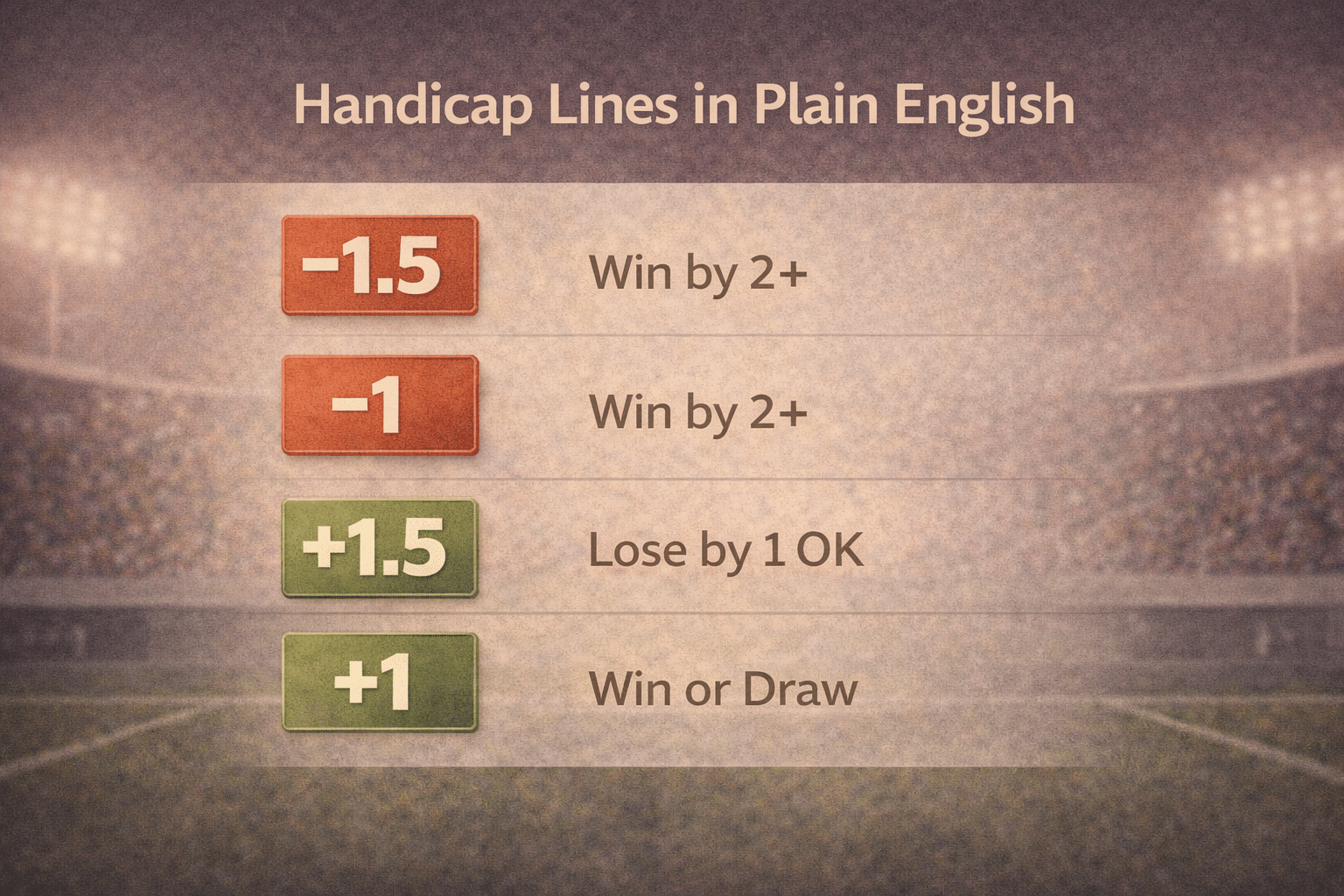
Once you get past the name, most handicap betting really comes down to reading the number next to the team. That number tells you how much work the team has to do, or how much breathing room they’ve been given.
Plus and Minus, What They Actually Mean
The sign is more important than the number itself.
- A minus means the team starts behind and needs to win by a certain margin
- A plus means the team starts ahead and can afford to lose by a certain amount
From there, the decimal decides whether a draw or refund is possible.
A Quick Handicap Line Translator
Here’s how some of the most common handicap lines work once the game is over.
| Handicap line | What needs to happen for the bet to win |
| -1.5 | Team must win by 2 or more |
| -1 | Team must win by 2 or more (win by exactly 1 usually means a refund) |
| 1.5 | Team can win, draw, or lose by 1 |
| 1 | Team can win or draw (lose by exactly 1 usually means a refund) |
| -0.5 | Team must win the game |
| 0.5 | Team can win or draw |
This is the point where handicap betting starts to make sense rather than feel tricky. You’re no longer guessing what the market means. You’re just translating the line into a margin.
Why Some Lines Use Half Points
You’ll notice that many handicaps end in .5. That’s done on purpose. Half points remove the grey area and force a result one way or the other. There’s no tie and no refund. The bet either wins or loses.
Whole numbers leave the door open for the margin to land exactly on the line, which is why refunds or pushes can come into play.
Once you’re comfortable reading the number and the decimal, most handicap markets stop looking intimidating. From there, the only real difference is how the market is structured, which is where formats like no-draw, Asian, and 3-way handicaps come in.
No-Draw Handicap Betting
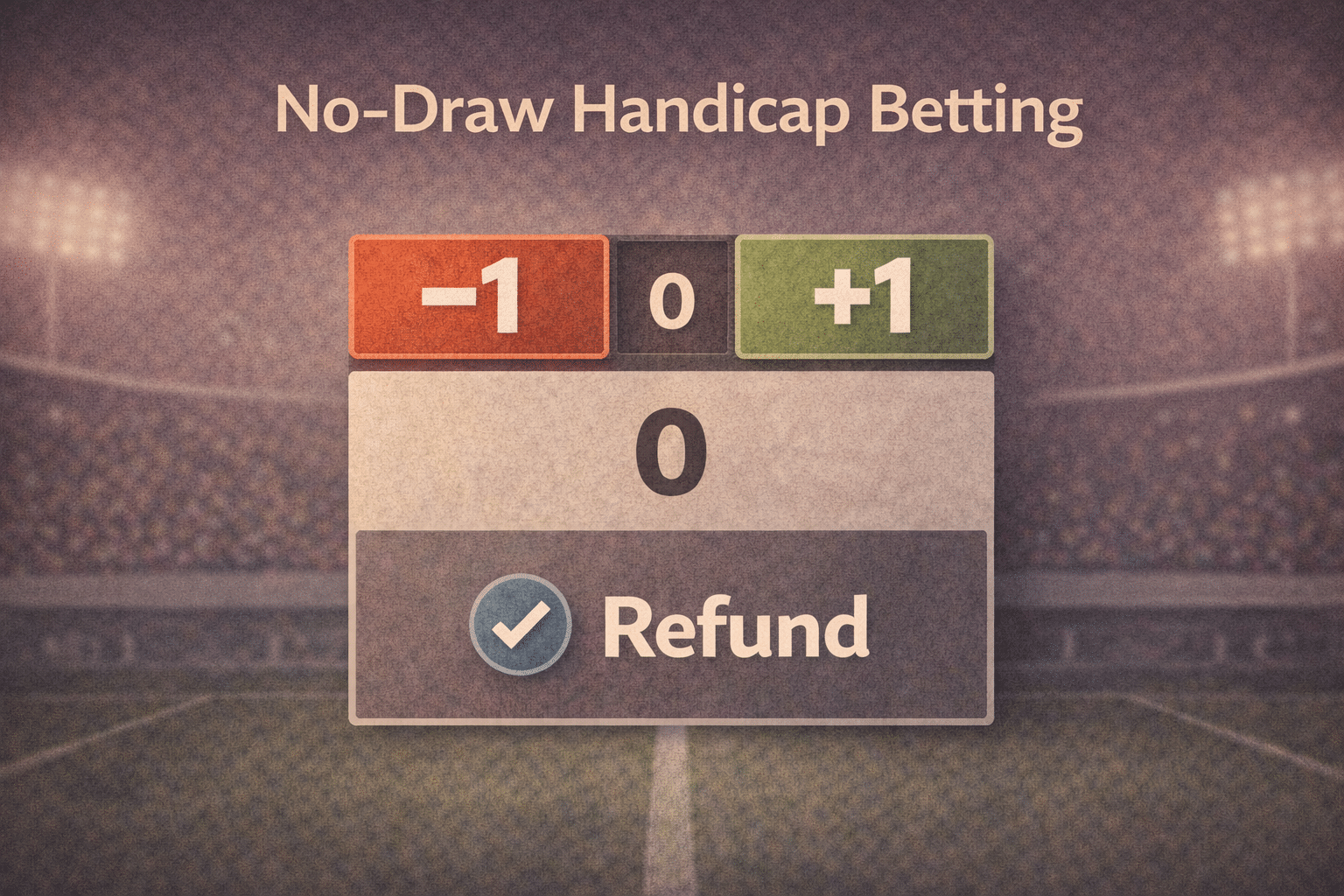
No-draw handicap betting is usually the simplest format for people to get comfortable with, especially if they’re still adjusting to how handicaps are settled.
At a glance, it looks similar to a standard handicap, but there’s one key difference.
What “No-Draw” Actually Means
In a no-draw handicap market, the handicap is applied in a way that removes the draw as a losing outcome.
That usually happens when:
- A whole number handicap is used, like -1 or +2
- The margin lands exactly on that number
Instead of the bet winning or losing, the stake is typically refunded.
So rather than forcing a result at all costs, this format gives you a bit of protection if the game finishes right on the line.
How a No-Draw Handicap Is Settled
Think of it like this:
- If the adjusted score favours your team, the bet wins
- If the adjusted score favours the other side, the bet loses
- If the adjusted score is level after the handicap is applied, the bet is usually refunded
That refund outcome is what separates no-draw handicaps from half-point lines.
Why Some Punters Prefer This Format
No-draw handicaps tend to appeal to people who:
- Expect a close finish
- Don’t want the bet decided by a single late score
- Prefer knowing there’s a safety net if the margin lands exactly on the number
They’re often seen as a middle ground between a straight result and a more aggressive handicap line.
When You’ll Usually See No-Draw Handicaps
You’re most likely to see this format when:
- Teams are fairly evenly matched
- The expected margin is small
- A whole number handicap makes sense for the sport
It’s still the same underlying idea as any handicap bet. The only real difference is how the market handles that “right on the line” outcome.
Asian Handicap Betting
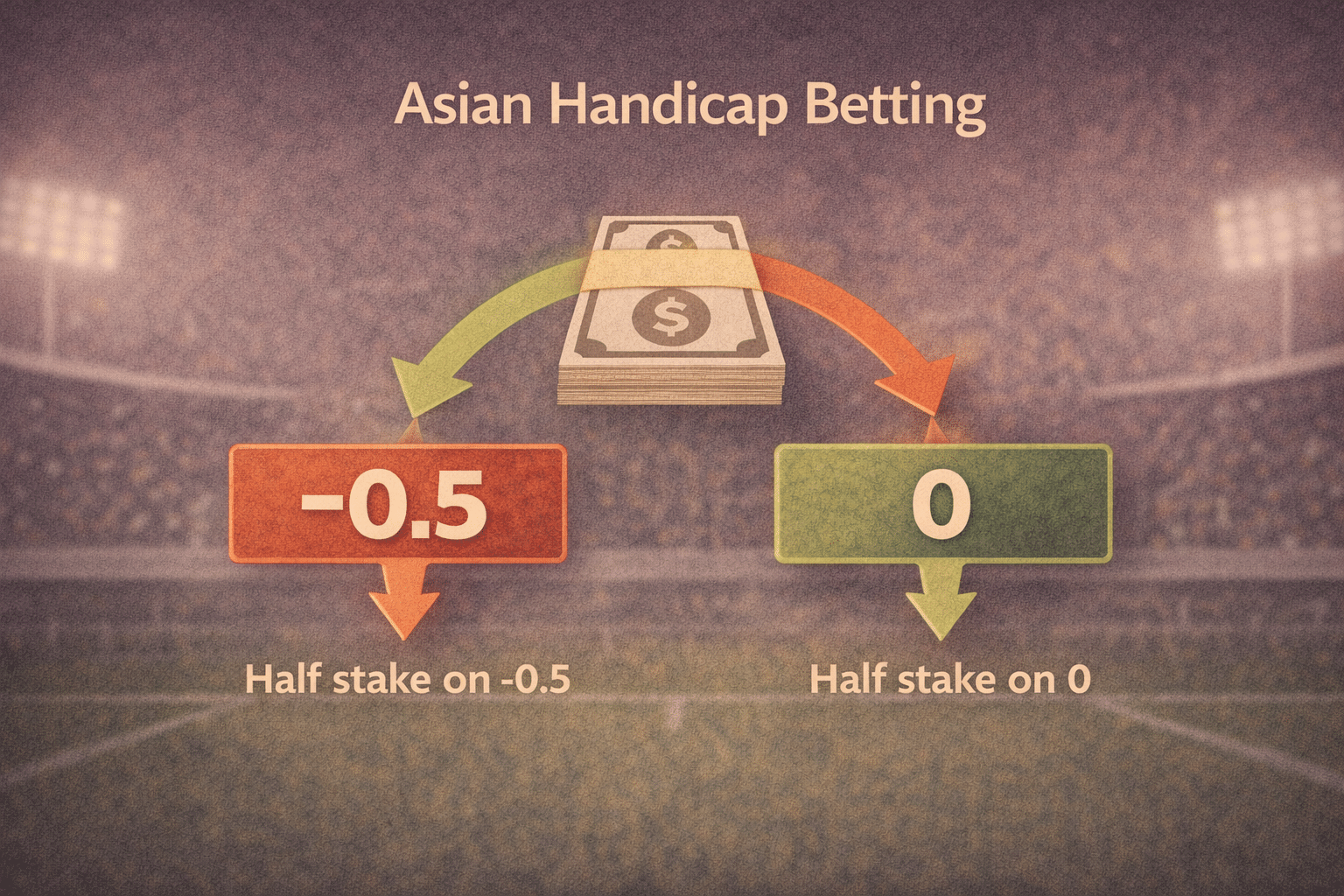
Asian handicap betting builds on the same idea as no-draw handicaps, but instead of refunding your stake when things land right on the line, it splits the outcome.
That sounds more complicated than it is, but once you see how it works, it starts to feel pretty logical.
Why Asian Handicaps Exist
Whole-number handicaps only give you three possible outcomes: win, lose, or refund. Asian handicaps were created to smooth that out by:
- Reducing the number of full refunds
- Letting markets sit between two numbers
- Making close results easier to price
The trade-off is that instead of an all-or-nothing result, your stake can be split.
The Key Thing to Know Up Front
With Asian handicaps, your bet can settle in five different ways:
- Full win
- Half win
- Push (stake refunded)
- Half loss
- Full loss
Once you understand how those outcomes happen, the rest falls into place.
How Quarter Lines Work
Quarter lines are the part that causes the most confusion. Lines like -0.25, +0.75, or -1.25 look strange, but they’re really just two bets rolled into one.
Your stake is split evenly across the two nearest half or whole numbers.
Asian Handicap Cheat Sheet
Here’s how the most common Asian handicap lines are usually treated.
| Asian handicap | How the stake is split |
| 0 | Entire stake on level ball |
| -0.25 | Half on 0, half on -0.5 |
| 0.25 | Half on 0, half on +0.5 |
| -0.75 | Half on -0.5, half on -1 |
| 0.75 | Half on +0.5, half on +1 |
| -1.25 | Half on -1, half on -1.5 |
| 1.25 | Half on +1, half on +1.5 |
What That Means in Practice
Let’s say you back a team at -0.25.
- If they win, both halves win and you get paid in full
- If they draw, half the stake is refunded and half loses
- If they lose, the entire bet loses
A +0.75 works the other way around:
- A win or draw pays in full
- A one-point loss results in a half loss
- A heavier loss means the full stake is gone
This is why Asian handicaps often feel more forgiving than straight lines, especially in tight games. They soften the outcome when the result lands close to the expected margin.
Why People Either Love or Avoid Asian Handicaps
Some punters like Asian handicaps because:
- They reduce the impact of a single late score
- They offer more nuanced outcomes than win or lose
- They suit close, competitive matchups
Others avoid them simply because:
- Settlement isn’t instantly obvious
- Half wins and half losses feel unintuitive at first
Once you’ve seen a few settled, though, they usually stop feeling strange and start feeling quite practical.
3-Way Handicap Betting
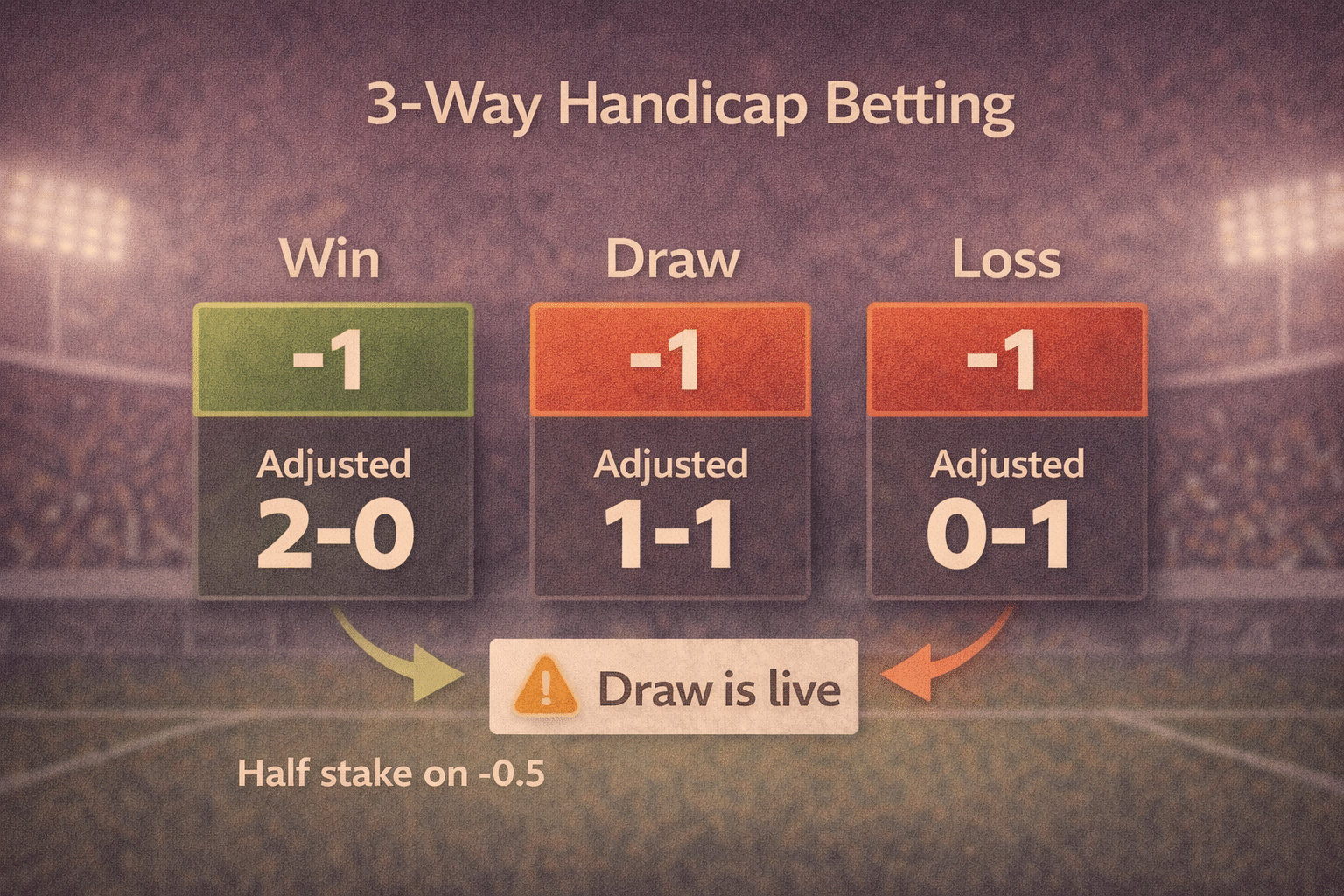
3-way handicap betting takes the same handicap idea but adds the draw back in as a selectable outcome. Instead of just choosing between two sides, you’re choosing between three possible results after the handicap is applied.
That extra option is the main thing that separates this format from no-draw and Asian handicaps.
How a 3-Way Handicap Works
In a 3-way handicap market:
- The handicap is applied to the final score
- The adjusted result can be a win, a loss, or a draw
- You must pick which of those three outcomes will occur
Because of that, there’s no refund safety net. If the adjusted score lands on a draw and you didn’t back the draw, the bet loses.
Why This Format Exists
3-way handicaps are usually offered when:
- A whole number handicap is being used
- The bookmaker wants to price the draw separately
- The margin is expected to sit right around a key number
Instead of refunding stakes when the game lands exactly on the line, this format turns that scenario into its own outcome.
What to Be Careful Of
The biggest trap with 3-way handicaps is forgetting that the draw is live.
People are often comfortable backing a favourite or an underdog on a standard handicap, but in a 3-way market:
- A result that would normally be a push now becomes a losing bet
- The price on each option reflects that added risk
If you’re not consciously thinking about the adjusted draw, it’s easy to get caught out.
When 3-Way Handicaps Make Sense
This format tends to suit situations where:
- You have a clear view on how the margin lands
- You’re comfortable ruling out the adjusted draw
- You’re happy trading safety for a more defined outcome
If that feels a bit rigid, that’s because it is. Compared to no-draw and Asian handicaps, 3-way markets are less forgiving, but also more explicit about what needs to happen.
At this point, you’ve seen the three main handicap formats. The next step is tying them together with real examples, so you can see how these markets actually settle once the game is over.
Handicap Betting Examples (How Bets Are Actually Settled)
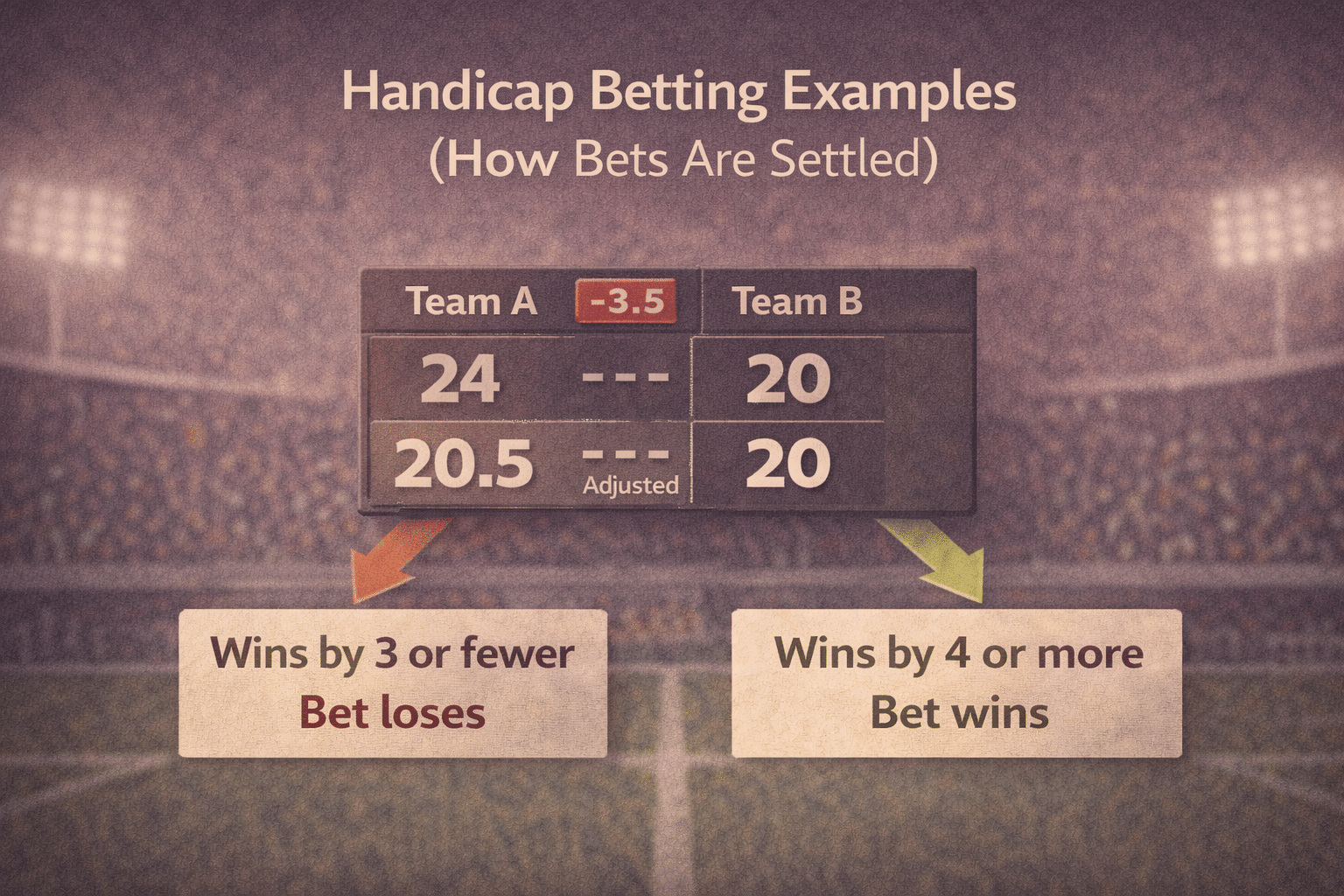
Once you understand the formats, the last piece is seeing how a handicap bet is settled once the game finishes. The score itself never changes. What changes is how that score is treated for betting purposes.
Below are a few simple examples showing how different handicap types play out.
Example 1: Half-Point Handicap (No Draw Possible)
- Team A: -6.5
- Team B: +6.5
If Team A wins by:
- 7 or more → Team A covers the handicap and the bet wins
- 6 or fewer → Team A misses the line and the bet loses
There’s no grey area here. The half point removes the possibility of a draw or refund. One side wins, the other loses.
This is why half-point handicaps feel very clean once you’re used to them.
Example 2: Whole-Number Handicap (Refund in Play)
- Team A: -6
- Team B: +6
If Team A wins by:
- 7 or more → Team A covers and the bet wins
- Exactly 6 → The adjusted score is level and the stake is usually refunded
- 5 or fewer → Team A misses the handicap and the bet loses
This is the kind of setup where no-draw handicaps often appear. That “exactly on the number” result is treated differently depending on the market format.
Example 3: Asian Handicap With a Quarter Line
- Team A: -0.25|
- Team B: +0.25
Your stake is split across:
- Half on 0
- Half on -0.5
If Team A:
- Wins → both halves win
- Draws → half refunded, half loses
- Loses → full loss
This is a good example of how Asian handicaps soften the outcome when a game lands right around expectations.
Example 4: 3-Way Handicap
- Team A: -1
- Team B: +1
- Draw is a selectable outcome
If Team A wins by:
- 2 or more → Team A wins the bet
- Exactly 1 → Adjusted score is a draw
- Anything else → Team B wins the bet
There’s no refund here. The draw is treated as its own result, which is why this format feels less forgiving than the others.
The Pattern to Look For
Across all these examples, the same idea keeps coming up:
- The score stays the same
- The handicap is applied after the game
- The market format decides how close results are handled
Once you start thinking in those terms, handicap betting stops feeling like a separate skill and starts feeling like a different way of reading the same result.
Next, we can look at common settlement questions and mistakes, which is usually where people still get caught out even after understanding the basics.
Common Handicap Betting Mistakes
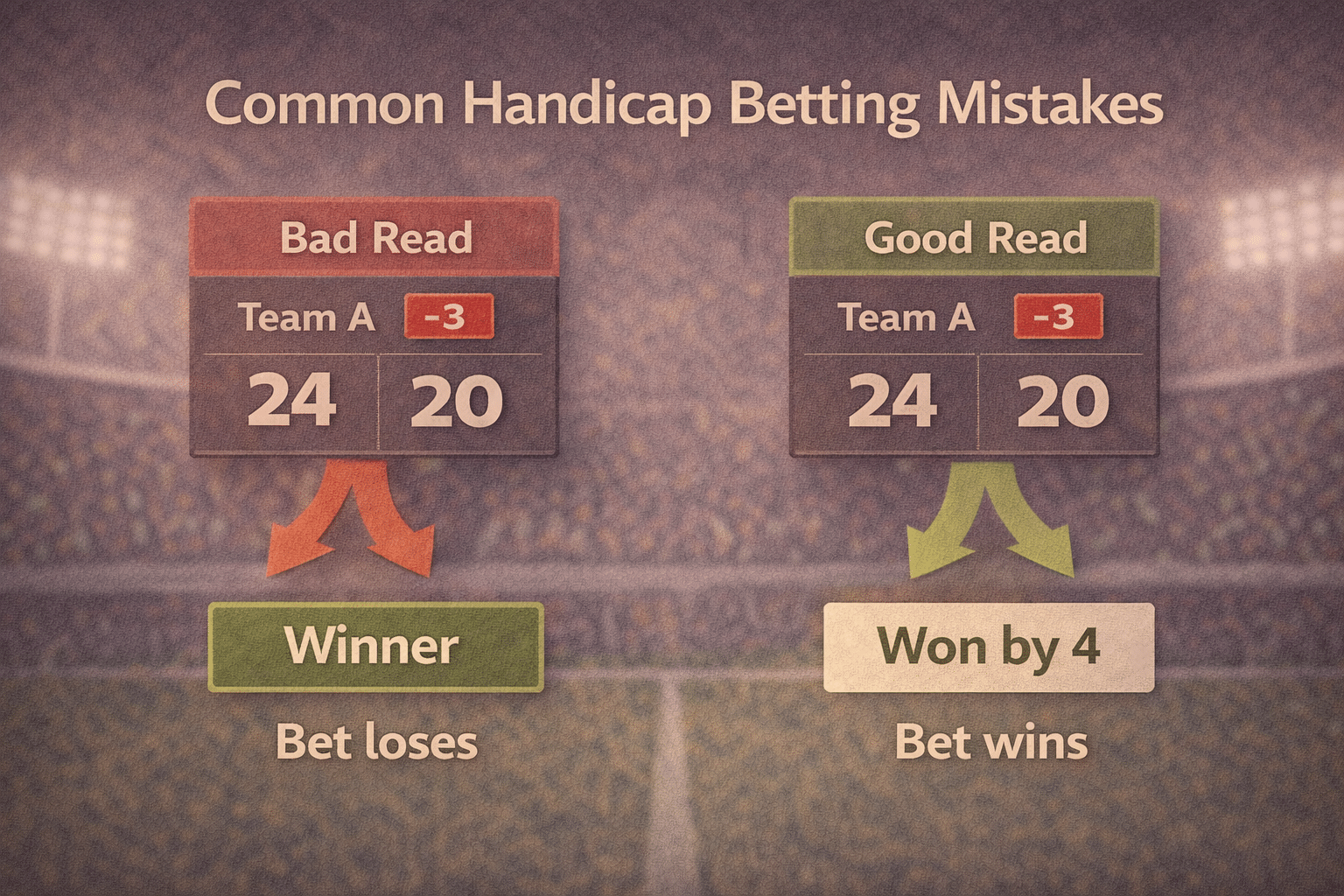
Handicap betting usually makes sense once you understand it, but there are a few mistakes that catch people out again and again. Most of them have nothing to do with picking the wrong team and everything to do with misreading the market.
Treating a Win as a Winning Bet
This is the most common one.
A team wins the match, you feel good about the pick, and then the bet doesn’t land. With handicap betting, the result and the margin are separate things. If the favourite doesn’t win by enough, the bet still loses.
Once you fully separate those two ideas, a lot of confusion disappears.
Ignoring the Decimal
People often focus on the team name and forget about the number next to it.
That half point or quarter line is doing important work. It decides whether a draw is possible, whether a refund exists, or whether your stake might be split. Missing that detail is how people end up surprised at settlement.
Forgetting Which Format They Picked
No-draw, Asian, and 3-way handicaps can all look similar at a glance, especially when the numbers line up.
The problem is that they don’t settle the same way. A result that gives you a refund in one format might be a full loss in another. Always knowing which handicap type you’re in matters just as much as the line itself.
Assuming Bigger Lines Are Safer
A larger handicap doesn’t automatically mean a safer bet.
Big lines often rely on everything going right for the favourite. If a team builds a lead and then eases off, or if the underdog hangs around longer than expected, a big handicap can unravel quickly.
This is especially true in sports where late scores are common.
Not Thinking About How the Game Is Likely to Play Out
Handicap betting rewards thinking about game flow, not just quality.
Questions like:
- Does this team keep scoring when they’re ahead?
- Do they protect a lead or push for more?
- Are they happy to win ugly?
Those tendencies matter more for handicaps than they do for straight results.
When Handicap Betting Makes Sense
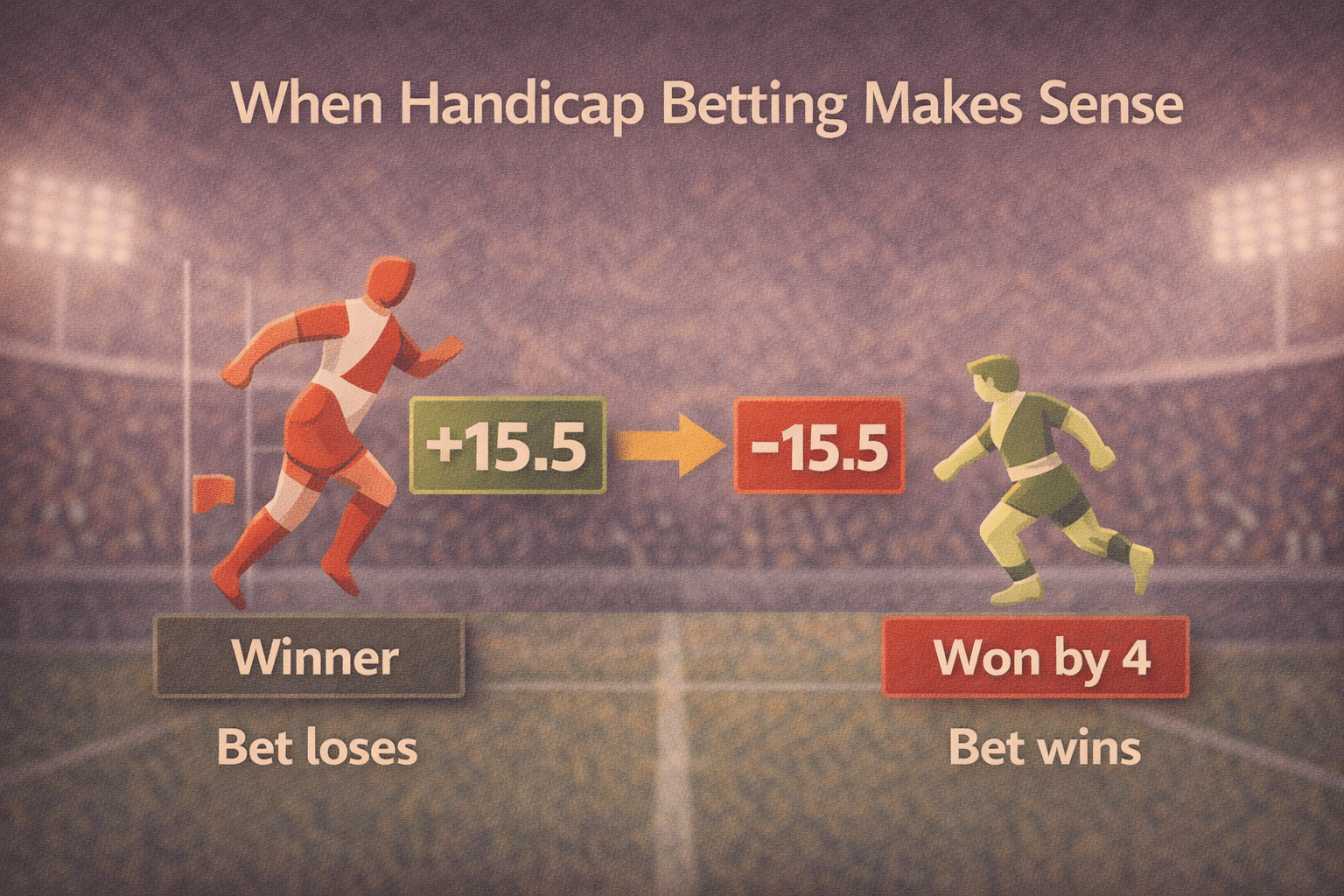
Handicap betting isn’t something you have to use all the time. It’s just one way of looking at a matchup, and it tends to make the most sense in certain situations.
When a Matchup Feels Too One-Sided
If one team is clearly stronger, backing them to just win often doesn’t feel very satisfying. The price is short, and the result itself rarely tells you much.
This is where handicap betting comes into play. It shifts the question from “will they win?” to how convincingly they’re likely to do it.
When You Expect a Competitive Loss
Backing an underdog outright usually means hoping everything goes their way. Handicap betting lowers that bar.
If you think the weaker side can stay in touch, defend well, or slow the game down, a handicap can let you be right even if they don’t get over the line.
When You Have a View on the Margin, Not Just the Winner
Some games stand out not because of who’s playing, but because of how they’re likely to unfold.
You might expect:
- A favourite to jump out early and then manage the game
- A scrappy contest where neither side pulls away
- A late score that flatters one team without reflecting the balance of play
Handicap betting lines up well with those kinds of reads, because it’s built around the margin rather than the headline result.
When Different Handicap Formats Offer Different Trade-Offs
This is where knowing the formats helps.
- No-draw handicaps make sense if you want protection around a key number
- Asian handicaps suit close games where a half win or half loss feels reasonable
- 3-way handicaps only make sense if you’re comfortable ruling out the adjusted draw
Choosing the format is often just as important as choosing the side.
A Final Word on Handicap Betting
Handicap betting looks more complicated than it really is. Once you stop treating it as a separate thing and start seeing it as a way of reframing the margin, most of the confusion fades pretty quickly.
The key is knowing what the line is asking for and how the market you’ve chosen handles close results. Half points remove the draw, whole numbers can bring refunds into play, and Asian handicaps split outcomes instead of forcing a hard win or loss. Those details matter more than the team names once the game is underway.
You don’t need to use handicap betting on every match. It’s just another tool. In some games it adds clarity, in others it overcomplicates things. The more comfortable you get reading the numbers and understanding settlement, the easier it becomes to decide when it actually makes sense.
If nothing else, the next time you see a handicap market, it should feel familiar rather than something you instinctively skip past.
Handicap Betting FAQs
Is handicap betting the same as line betting?
They’re based on the same idea. Both involve giving one side a head start and asking the other to overcome it. In Australia, “line betting” is the term most people use day to day, while “handicap betting” is the broader name for the market and its different formats.
If you understand one, the logic carries across to the other.
What does +1.5 mean in handicap betting?
A +1.5 handicap means the team can win, draw, or lose by one point and still win the bet. The half point removes the possibility of a draw or refund, so the bet always settles one way or the other.
What does -1 mean in handicap betting?
A -1 handicap means the team needs to win by two or more for the bet to win. If they win by exactly one, the adjusted score is level and the stake is usually refunded, depending on the market rules.
Can a handicap bet end in a draw?
It depends on the format.
- Half-point handicaps can’t end in a draw
- Whole-number handicaps can result in a refund
- 3-way handicaps include the draw as a losing or winning outcome
The number and the market type together decide how close results are handled.
Does handicap betting include extra time or overtime?
This depends on the specific sport and market rules. Some handicap markets include extra time or overtime, while others are settled on regulation time only. It’s always worth checking the settlement conditions for the market you’re using.
Is handicap betting harder than regular win betting?
It can feel that way at first because you’re thinking about the margin, not just the result. Once you get used to reading the line and understanding how it’s settled, many people find it just feels different, not harder.