


How do betting odds work is one of those questions most people only ask after they’ve already placed a few bets. You might know that bigger numbers mean bigger payouts, but not much beyond that.
At a basic level, betting odds are just numbers that set the price for an outcome at that moment in time. In Australia, they’re usually shown as decimal odds, and they’re doing two jobs at once. They hint at how likely something is considered to happen, and they tell you what the return would be if it does.
What often gets missed is that odds aren’t fixed truths. They move around. They react to money being placed, late information, and the type of market you’re betting into. That’s why the same team, horse, or outcome can look slightly different depending on when you check or which format is being used.
This page breaks down how betting odds actually work for Australian punters. No rankings, no tips. Just a clear explanation of what the numbers mean, how to read them, and why they behave the way they do across different sports and betting formats.
What Betting Odds Represent
When people talk about odds, they often treat them like a statement of fact. As if the number is saying what will happen. That’s not really how they work.
Odds are closer to a price tag than a prediction. They show what return is being offered for an outcome right now, based on how that market is shaping up at that point in time.
Short odds don’t mean something is “safe”. Long odds don’t mean something is impossible. All they’re doing is reflecting how likely an outcome is considered, combined with how much money has already gone into that market.
That second part matters more than many people realise. Odds can move simply because lots of people are backing the same side. Nothing about the event itself has to change for the number to shift. It’s just the market adjusting.
Another thing that trips people up is assuming odds are a clean reflection of probability. They’re not. The numbers include a margin, which means the implied chances across all outcomes will add up to more than 100%. That’s normal, but it’s why odds shouldn’t be read as a pure percentage chance.
So when you’re looking at betting odds, what they’re really representing is:
- The price being offered at that moment
- The balance between risk and potential return
- How the market is behaving, not a guarantee of the result
Once you look at odds that way, a lot of the confusion around them starts to fade.
Odds Formats Used in Australia
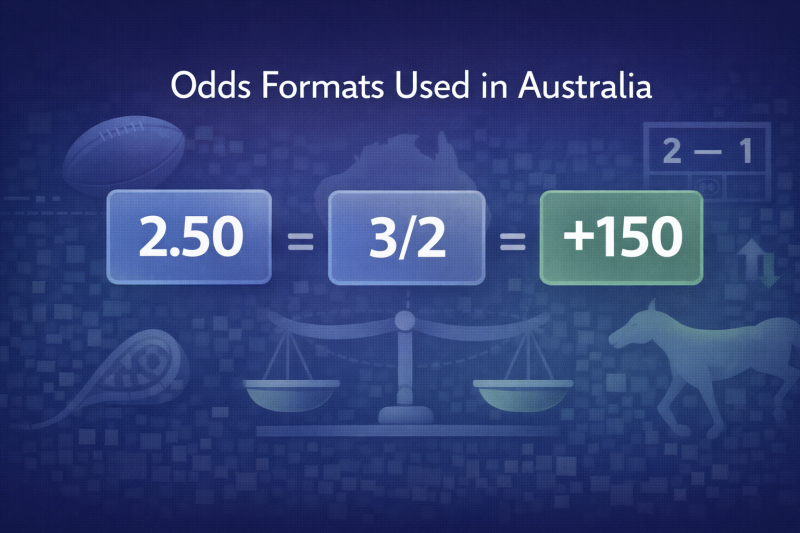
If you’ve ever wondered why odds sometimes look different depending on where you’re reading about a game, it usually comes down to format.
In Australia, decimal odds are the norm. That’s what you’ll see across most sports and racing markets at the best betting sites in Australia, and it’s what most people here instinctively understand, even if they’ve never thought about it as a “format”.
Other styles do pop up though. You might see them in overseas coverage, older racing references, or when following US sports. They’re not different bets, just different ways of writing the same price.
Decimal odds
Decimal odds tell you the total return for every $1 staked, stake included. If the odds are 2.20, a $1 bet returns $2.20 if it wins. A $10 bet returns $22.
That’s it. No extra steps. That simplicity is the main reason decimals stuck in Australia. You can look at a number and immediately get a rough sense of the payout.
Fractional odds
Fractional odds look like 4/1 or 7/2. They’re more about profit than total return.
A price of 4/1 means you win $4 for every $1 staked, then get your stake back on top. Some Australians recognise this style from horse racing talk or UK coverage, but it’s not something most people here actively use anymore.
American odds
American odds use plus and minus numbers, like +180 or -130. They’re based around how much you’d win, or need to risk, to make $100.
If that sounds awkward, that’s because it kind of is unless you’re used to it. These odds mainly show up when following US leagues or reading American betting guides. They’re worth understanding at a surface level, but they’re not something most Australian bettors deal with day to day.
The main takeaway is that the format doesn’t change the value. A bet priced at 2.00 in decimal form is the same bet whether it’s written as evens, 1/1, or +100 somewhere else.
How to Read Decimal Odds
Most Australians are already used to decimal odds, even if they’ve never stopped to think about what they actually mean. You see a number, you have a rough feel for the payout, and that’s usually enough.
Where it gets fuzzy is what that number is really showing.
An easy way to look at it is this: decimal odds are just saying “this is what comes back for each dollar you put on”.
If something’s priced at 1.90, a $1 stake comes back as $1.90 if it wins.
If it’s 3.20, that same $1 comes back as $3.20.
There’s nothing extra to add on after that. The stake is already baked into the number.
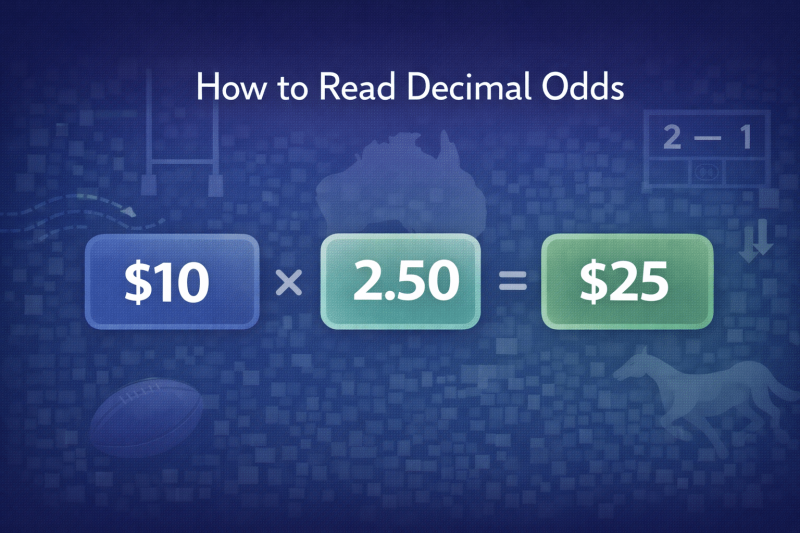
So if you throw $10 on something at 2.50 and it gets up, you’ll see $25 returned. That’s it. No extra step, no separate calculation.
The other thing decimal odds give you is a rough sense of how the market sees an outcome. Numbers close to 1.00 usually mean “more likely, lower return”. Bigger numbers usually mean “less likely, higher return”. That’s all it’s saying.
They’re not telling you whether a bet makes sense or not. They’re just setting the price at that moment.
Once you think about decimal odds that way, reading them stops feeling technical. You’re just multiplying one number by another and checking what comes back.
Understanding Fractional and American Odds
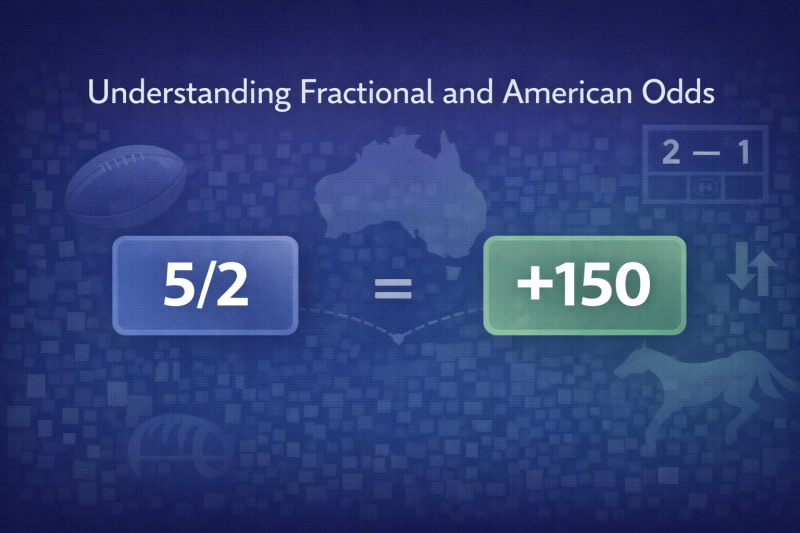
Even though decimal odds are standard in Australia, you’ll still bump into other formats from time to time. Usually it’s when reading overseas coverage, following US sports, or looking at older racing references. The numbers look different, but they’re not changing the bet itself.
They’re just alternate ways of writing the same price.
Fractional Odds
Fractional odds are written like 5/1 or 7/2. They’re focused on profit rather than total return.
So 5/1 means you’d win $5 for every $1 staked, and then get your stake back on top. A $10 bet would return $60 in total.
Some Australians recognise this format from horse racing talk or UK media, but it’s mostly a legacy style here. You’ll rarely be asked to actually use it when placing a bet.
American Odds
American odds use plus and minus numbers, like +200 or -150. They’re built around a $100 reference point, which is why they feel awkward if you’re not used to them.
A plus number shows how much you’d win from a $100 stake.
A minus number shows how much you’d need to stake to win $100.
If that feels unintuitive, you’re not alone. Most Australians only ever see this format when following US leagues or reading American betting guides.
Why the Format Doesn’t Really Matter
The important thing is that all three formats represent the same underlying price. A bet doesn’t become better or worse because it’s written differently. Only the presentation changes.
Once you’re comfortable reading decimal odds, the others are mostly something you translate mentally or ignore altogether.
How Odds Are Calculated
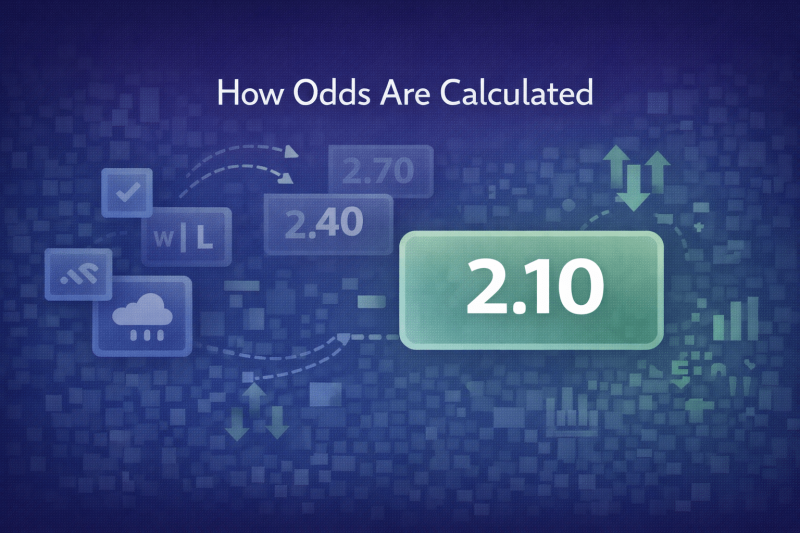
Odds don’t just appear out of nowhere, and they’re not locked in by a single formula either. They start with an educated guess, then get nudged around as people actually start betting.
If you’ve ever wondered why odds shift when nothing obvious has happened, or why early prices look different to late ones, this is the bit that explains it.
Where the First Numbers Come From
When odds first go up, they usually start with data. Past results, team lists, injuries, weather, form. That sort of thing. It gives the market a rough starting shape.
Those early prices aren’t meant to be perfect. They’re more like a baseline that can be pushed around once people actually start betting.
How Betting Activity Moves the Odds
Once money starts coming in, odds start reacting to that.
If heaps of people jump on the same outcome, the price will often shift. Not because something new happened, but because the market is adjusting to where the action is. You’ll sometimes see odds move even when there’s been no news at all.
That’s normal. It’s just supply and demand playing out.
Why Odds Change as an Event Gets Closer
The timing matters more than people think.
Early odds tend to lean on modelling. Later odds are shaped more by how people have been betting. That’s why prices can look very different an hour before kickoff compared to when the market first opened.
Why Odds Aren’t a Perfect Reflection of Chance
One last thing that’s easy to miss. Odds aren’t trying to show the exact chance of something happening.
There’s a margin built in, which means if you turn all the odds in a market into percentages, they’ll add up to more than 100%. That’s just how markets work.
So when you look at odds, it helps to think of them as prices that move, not a clean prediction of what’s going to happen.
Odds vs Probability
This is where a lot of people quietly get tripped up.
Odds and probability are related, but they’re not the same thing. Odds hint at chance, but they don’t spell it out cleanly, and they’re definitely not saying “this will happen X percent of the time”.
A quick way to think about it is that odds can be turned into probability, but that probability comes with some baggage.
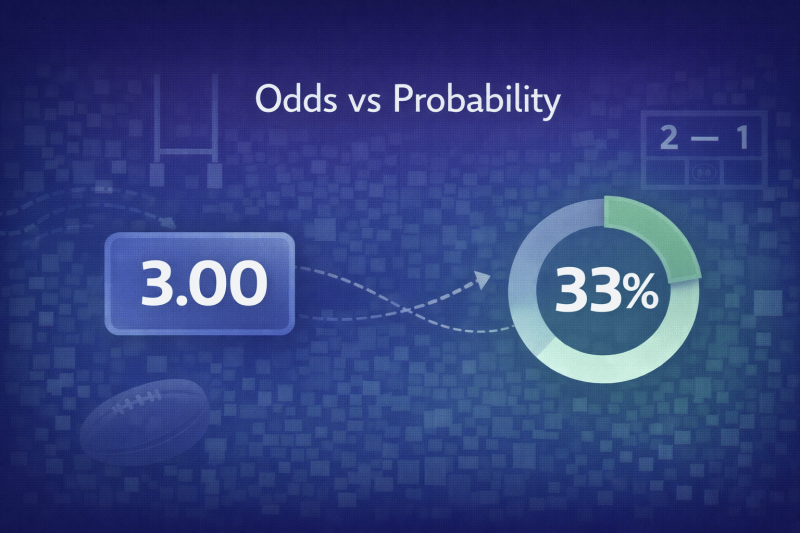
With decimal odds, the implied probability is worked out by dividing 1 by the odds. So odds of 2.00 imply a 50% chance. Odds of 4.00 imply a 25% chance. Simple enough on paper.
The catch is that those percentages aren’t pure. They include a margin. That margin is spread across all outcomes in a market, which is why, if you convert every option into a percentage and add them up, you’ll end up over 100%.
That’s why odds shouldn’t be read as a clean statement of likelihood. They’re a priced version of probability, shaped by modelling, market behaviour, and margin, not a neutral forecast.
This is also why two outcomes that look close in odds don’t always feel close in reality. The numbers are doing more than just expressing chance. They’re balancing a market.
Once you separate those ideas in your head, odds start to make a lot more sense. They’re not trying to be exact. They’re trying to work as prices.
Fixed Odds vs Tote Betting in Australia
This is one of those topics that sounds technical, but it’s actually pretty straightforward once you see the difference.
In Australia, especially with racing, you’ll often see both fixed odds and tote odds sitting side by side. They’re two different ways of pricing the same outcome, and they behave quite differently.
What Fixed Odds Mean
Fixed odds are exactly what they sound like. You lock in a price when you place the bet.
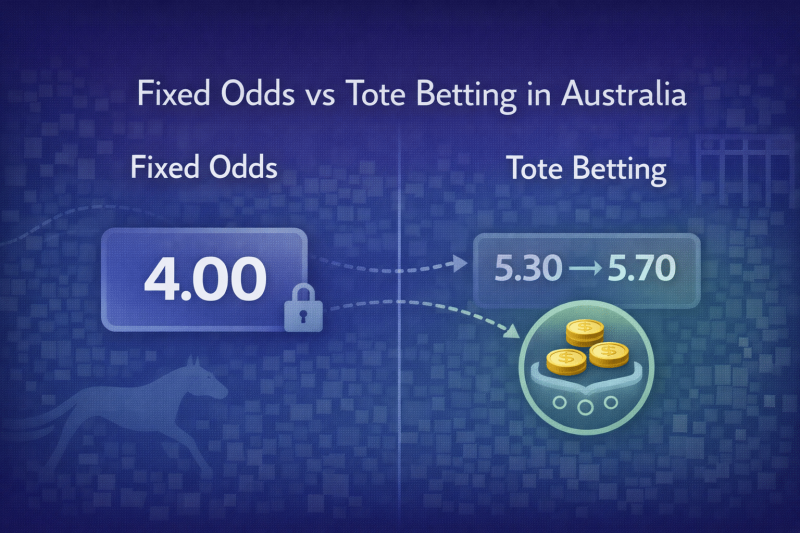
If you take $3.00 about a horse and it later shortens to $2.40, your bet stays at $3.00. If it drifts to $4.00, your price still doesn’t change. Once it’s placed, it’s set.
That certainty is the main appeal. You know what the return will be as soon as you place the bet, regardless of what happens to the market afterwards.
What is Tote Betting
Tote betting works differently. Instead of locking in a price, everyone’s money goes into a pool.
After the race, the pool is split between the winning bets, once deductions and fees are taken out. The final odds aren’t known until betting closes, which is why tote prices keep moving right up until jump time.
So when you place a tote bet, you’re accepting that the return is unknown until the result is decided.
Why Tote Odds Move So Late
Because tote odds are based on a shared pool, late money has a big impact.
A large bet just before the jump can noticeably shift the final price, especially in smaller pools. That’s why tote odds can look attractive early, then drop sharply once betting wraps up.
Why Both Systems Still Exist
Neither fixed nor tote betting is “better” in general terms. They just suit different preferences.
Fixed odds give certainty. Tote betting reflects the final shape of the market. That’s why both formats still sit side by side in Australian racing.
The key thing is knowing which one you’re looking at, because the number on the screen doesn’t behave the same way in both cases.
How Odds Behave Across Different Sports
Odds don’t act the same way across every sport, even though they’re built on the same basics. Once you’ve looked at a few different markets, the differences start to stand out pretty quickly.
Team Sports Like AFL and NRL
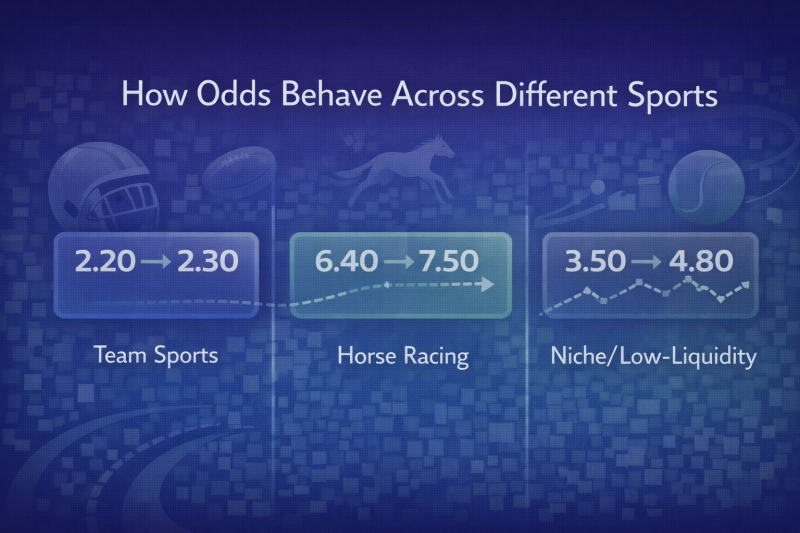
With sports like AFL and NRL, odds usually move in a fairly controlled way.
There’s heaps of public information, team lists are known early, and there’s plenty of money in the market. Because of that, prices don’t tend to jump around unless there’s a clear reason, like a late out or a big change to a lineup.
Most of the movement is small adjustments as the game gets closer, rather than big swings.
Horse Racing Markets
Racing feels very different, especially late.
Prices can shift a lot in the final minutes, sometimes for reasons that aren’t obvious unless you’re watching the market closely. Part of that is the number of runners, and part of it is how much late money comes in.
Tote pools make this even more noticeable. A decent-sized bet close to jump time can change the final odds in a way you almost never see in team sports.
Why It Feels So Different
If you’ve ever thought racing odds look chaotic compared to footy or league, you’re not wrong.
In team sports, odds usually react to information. In racing, they often react to timing and money. Same idea underneath, but very different behaviour on the surface.
Once you expect that difference, the movement starts to make a lot more sense and feels a lot less random.
Common Misunderstandings About Betting Odds
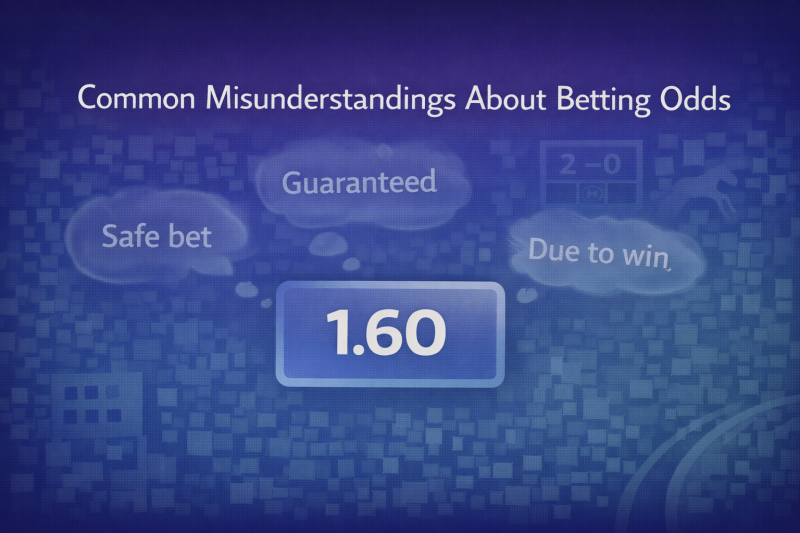
Most people don’t misunderstand odds because they’re complicated. It’s usually because a few ideas get picked up early and never really questioned.
Over time, those little assumptions can change how the numbers feel, even though the odds themselves haven’t changed at all. These are some of the more common ones that tend to trip people up.
Short Odds Are Safer
This is probably the most common one.
Short odds just mean a lower payout. They don’t mean an outcome is safe, guaranteed, or close to certain. Plenty of short-priced favourites lose. The odds are reflecting likelihood, not promising anything.
Long Odds Mean It Won’t Happen
On the flip side, big odds don’t mean no chance.
They just mean the outcome is considered less likely, which is why the return is higher. Upsets, blowouts, and surprise results happen all the time, especially in sports with lots of variables.
Odds Are a Prediction
It’s easy to read odds like they’re making a call on the result. They’re not.
Odds move because of money, timing, and how a market is behaving. A shift doesn’t automatically mean new information has dropped. Sometimes it just means people are betting one side more heavily.
That’s My Profit
Decimal odds already include your stake in the return.
This catches a lot of people out early. If you don’t separate return from profit properly, it’s easy to misread what you’re actually getting back.
Different Formats Mean Different Value
Decimal, fractional, and American odds might look different, but they’re just different ways of writing the same thing.
If the underlying price is the same, the bet hasn’t changed. Only the format has.
Once you’re aware of these little assumptions, odds start to feel a lot less confusing and a lot less loaded with meaning they don’t actually have.
Practical Odds Details People Often Miss
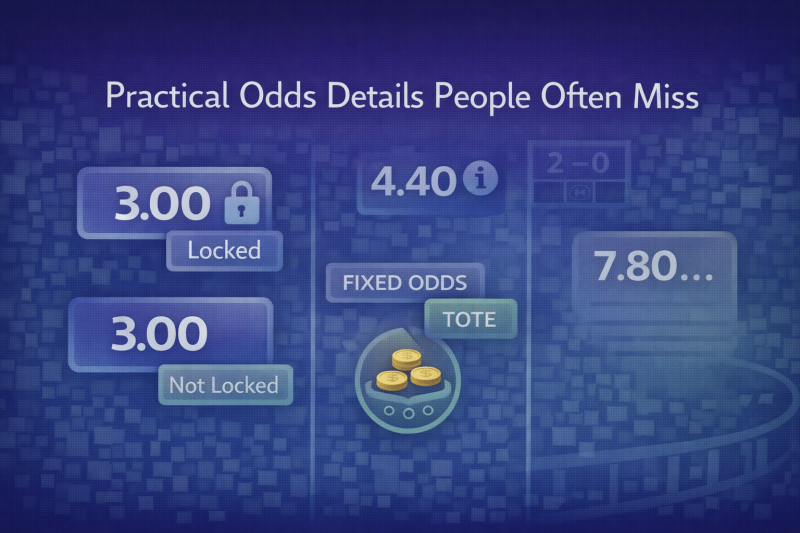
This isn’t about strategy or doing anything clever. It’s just the small stuff that’s easy to gloss over when you’re looking at a number and moving quickly.
Whether the Odds Are Locked In or Not
It sounds obvious, but it’s easy to miss. Fixed odds stay as they are once the bet is placed. Tote odds don’t. If you don’t check which one you’re looking at, the final return can end up very different to what you expected.
When Odds Can Still Change
With fixed odds, the price is usually locked once the bet is confirmed. With tote betting, prices keep moving until betting closes. That difference matters more the closer you get to jump time, especially in racing.
Small Conditions Tied to the Price
Some odds only apply under certain conditions, like specific market rules or timing cut-offs. Most people skip past this stuff, but it can explain why a payout looks slightly different to what you had in mind.
Reading Odds Too Quickly
It’s easy to glance at a number, assume you know what it means, and move on. Taking a second to check whether you’re looking at total return, profit, fixed, or tote can save a lot of confusion later.
None of this is complicated on its own. It’s just the kind of detail that gets overlooked because odds feel familiar. Slowing down for a moment usually clears things up.
Betting Odds in Australia: Final Thoughts
Once you strip the noise away, betting odds aren’t doing anything especially clever. They’re just numbers showing a price at a moment in time.
They tell you two things at once: how an outcome is being viewed right now, and what the return would look like if it happens. Everything else comes down to context. When the market opened, how much money has gone through it, whether the price is fixed or pooled, and what sport or format you’re looking at.
Most confusion comes from expecting odds to be more precise than they really are. They’re not forecasts, and they’re not promises. They move, they react, and sometimes they change for reasons that have nothing to do with what’s actually going to happen on the field or track.
Once you start reading odds as prices rather than predictions, they become much easier to make sense of, and a lot less frustrating to deal with.
FAQs About Betting Odds in Australia
How do betting odds work in simple terms?
They show the price for an outcome at that moment. The number tells you what comes back if it wins, based on how likely it’s considered and how the market is behaving.
Why do odds change after I’ve looked at them?
Because other people are betting. Odds can move just from money coming in, even if there’s no new news or changes to the event itself.
Are lower odds more likely to win?
Lower odds usually mean an outcome is considered more likely, but they don’t mean it will win. They just come with a smaller return.
Do betting odds include my stake?
With decimal odds, yes. The number already includes your stake in the total return.
What’s the difference between fixed odds and tote odds?
Fixed odds are locked in when you place the bet. Tote odds are worked out after betting closes, so the final return isn’t known upfront.
Are American odds better or worse than decimal odds?
Neither. They’re just a different way of showing the same price. The value doesn’t change, only the format does.