


What is a parlay in betting is a question a lot of Australian punters end up asking once they start reading betting content from overseas or poking around newer features in betting apps. You’ll see the word pop up next to things that look very familiar and wonder if you’re missing something new.
In reality, a parlay isn’t some exotic or advanced bet. It’s just another name for what most Aussies already know as a multi. Same idea, same structure, same risk. The difference is mostly in the wording and where it comes from.
If you’ve ever rolled a few picks together on the weekend and hoped they’d all land, you’ve already placed a parlay whether you called it that or not. The confusion usually comes from the terminology, not the bet itself.
This guide breaks it down without the noise. We’ll cover what a parlay actually is, how it works, how it compares to a multi, and why you’re seeing the term more often now. No sales pitch, no platform-specific fluff, just a clear explanation so the word “parlay” stops feeling like something separate or complicated.
How a Parlay Works
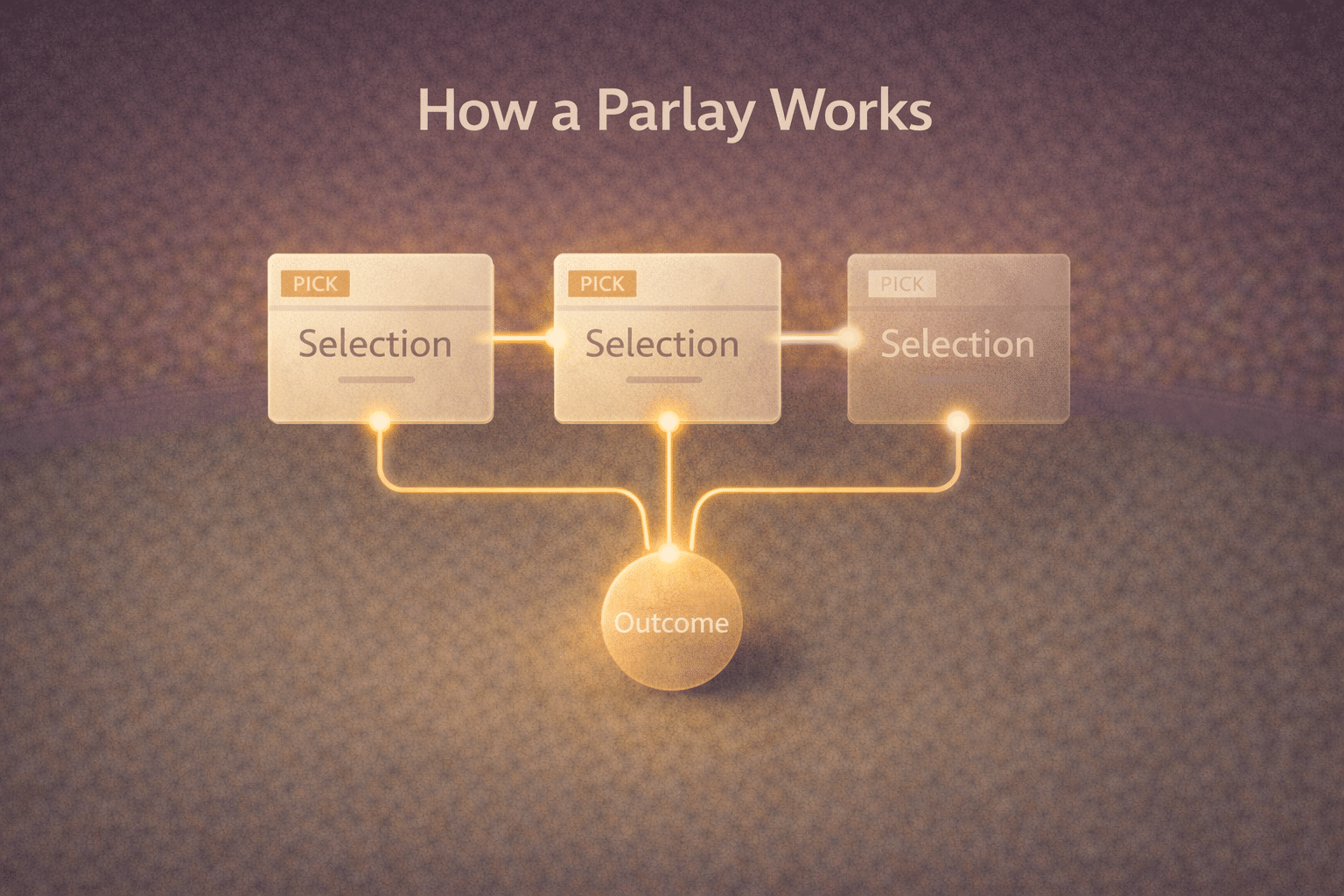
At a practical level, a parlay works the same way a multi does. You’re taking more than one selection and tying them together so they all rely on each other.
Here’s how it plays out step by step.
- First, you choose your selections: These can come from different games, different sports, or even different markets. For example, an AFL team to win, an NRL team to cover the line, and a tennis player to win a match.
- Next, those selections are grouped into one bet: Once you add them to the same bet slip, they stop being treated as individual bets. They become one combined wager with a single stake.
- The odds are then combined: Instead of each bet paying out on its own, the odds roll into each other. That’s why parlays can jump in value quickly, even when none of the individual picks look especially big.
- From there, it’s all or nothing: Each leg has to win for the parlay to stay alive. If one leg loses, the entire bet loses. There are no partial wins or consolation payouts.
If every leg wins, the parlay pays out once at the end. You don’t get paid after each result. The bet only settles when the final leg is decided, using the combined odds and your original stake.
That’s really all there is to it. The complexity people associate with parlays usually comes from the number of legs involved, not the mechanics themselves.
Parlay vs Multi
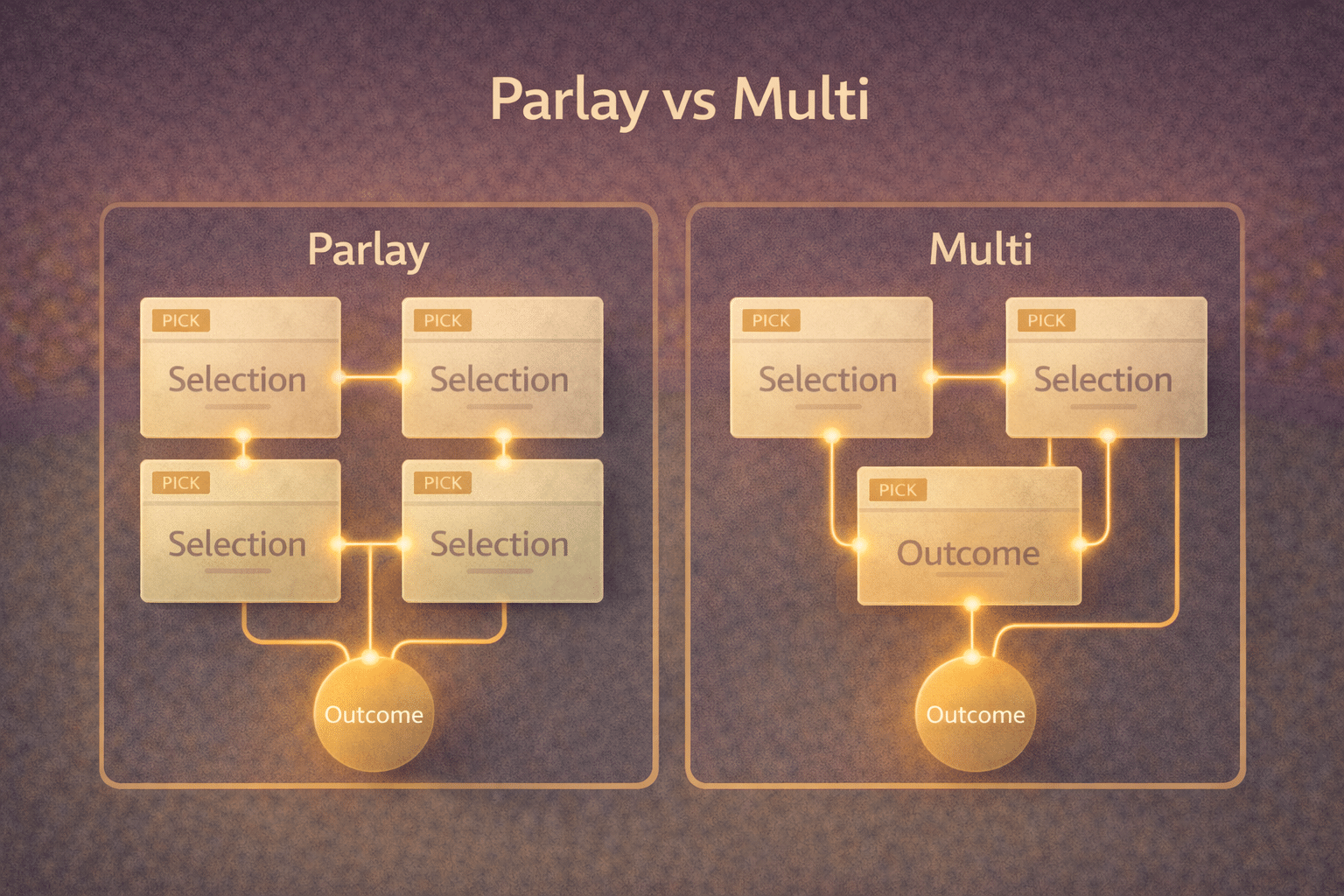
This is one of the most common sticking points, so it’s worth clearing up early.
A parlay and a multi are the same thing.
The difference is purely language. In Australia, most bookmakers and punters use the word multi. In the US and a lot of overseas content, the same bet is called a parlay. The structure, the rules, and the way the odds work are identical.
If you place what an American site calls a parlay, an Aussie bookmaker would call that exact same bet a multi. Two or more selections, all linked together, all needing to win.
Where people get confused is when they think a parlay must be something different or more complex. It isn’t. There’s no special twist, no extra feature, and no separate learning curve.
So if you already understand multis, you already understand parlays. Different word, same bet.
The only real difference you’ll notice is in naming. Australian sites will talk about multis, Same Game Multis, and Same Race Multis. Overseas sites will use terms like parlays, same game parlays, or accumulators.
Once you strip the labels away, they’re all built on the same idea: multiple selections, one bet, bigger potential return, higher risk.
Types of Parlays You’ll Come Across
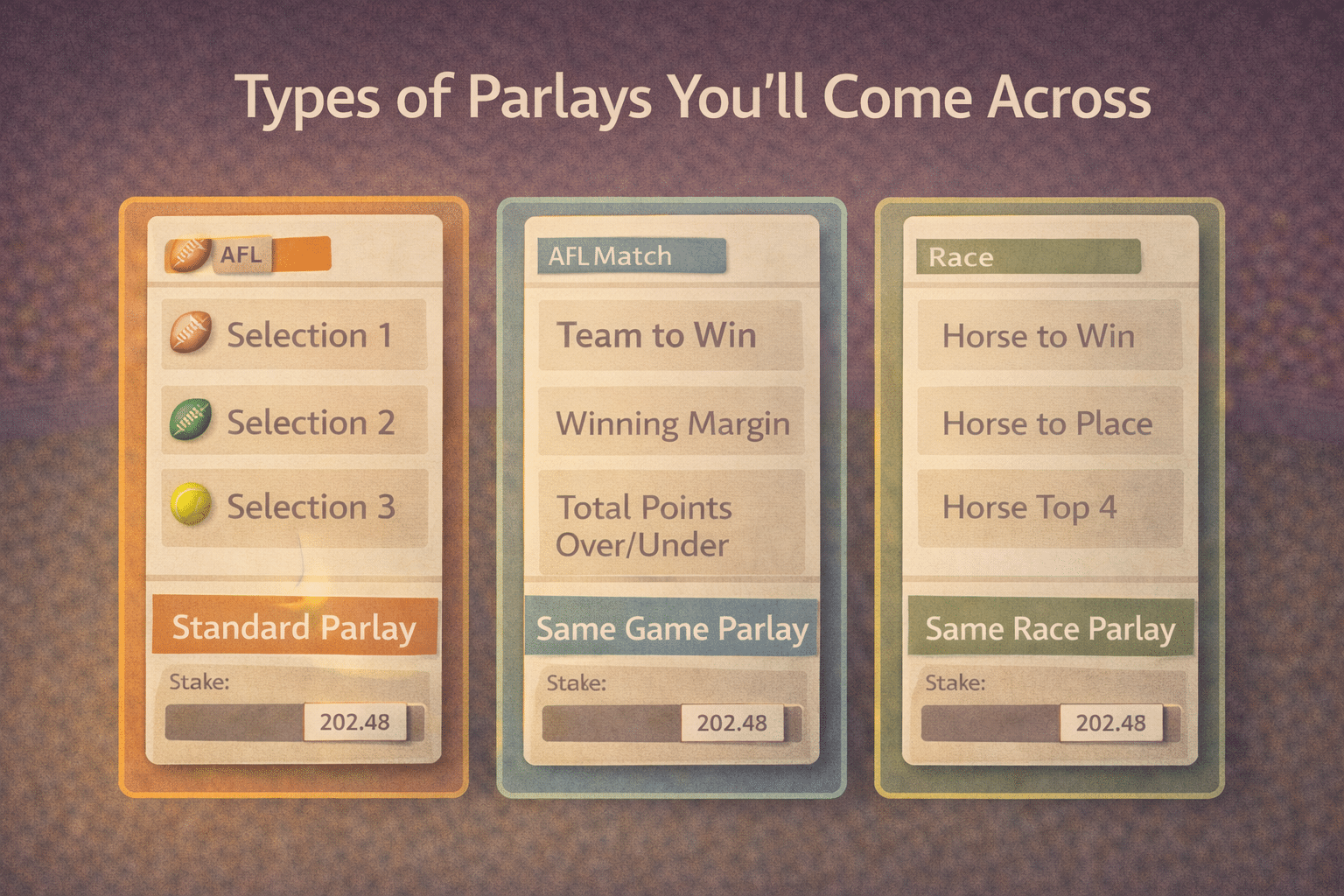
Once you get the basic idea of what a parlay is, the next thing you’ll notice is that not all parlays are built the same way. The core concept stays the same, but bookmakers dress it up in a few different formats.
Here are the main ones you’ll see most often.
Standard Parlays
This is the most straightforward version and usually where people start.
A standard parlay pulls selections from different games or events. They don’t have to be related at all. One could be AFL, another NRL, another tennis or basketball. As long as the markets are allowed to be combined, they can sit in the same bet.
Each leg stands on its own. The only rule is that they all need to win.
If someone says they’ve “got a parlay on for the weekend”, this is usually what they mean.
Same Game Parlays
Same Game Parlays, often shortened to SGPs, keep everything inside one match.
Instead of just picking a winner, you’re combining multiple outcomes from the same game. That might be a team to win, a player to score, and the total points to go over or under a certain number.
These are popular because they let you build a bet around how you think the game will play out. The catch is that the legs are connected, which is why the odds are usually adjusted compared to a standard parlay.
If the game script goes wrong early, it can take multiple legs down with it.
SGP+, SGPx, and Super Parlays
These are essentially parlays made up of smaller Same Game Parlays.
You might have one SGP from an AFL match and another SGP from an NRL match, then combine them into one bigger bet. Different bookmakers use different names, but the idea is the same.
You’re stacking game-specific opinions across multiple matches, which can blow the odds out quickly. It’s powerful when it lands, but very fragile if even one game doesn’t follow the script.
Round Robin Parlays
Round Robins work a little differently.
Instead of placing one all-or-nothing parlay, you’re placing several smaller parlays using the same selections. For example, if you choose three teams, a Round Robin would automatically create all possible two-leg combinations from those picks.
The upside is that you don’t need everything to win to get something back. The downside is that you’re effectively placing multiple bets, so your total stake is higher.
These suit people who like a few picks but want some protection if one lets them down.
Teasers
Teasers are most common in US-style sports betting, but you’ll still hear the term pop up.
A teaser lets you adjust the line or total in your favour, usually in exchange for adding another leg to the bet. The trade-off is lower odds compared to a standard parlay.
They’re less common now than they used to be, mostly because bookmakers offer a wide range of alternate lines without needing to bundle them into a teaser.
Parlay Tips for Beginners
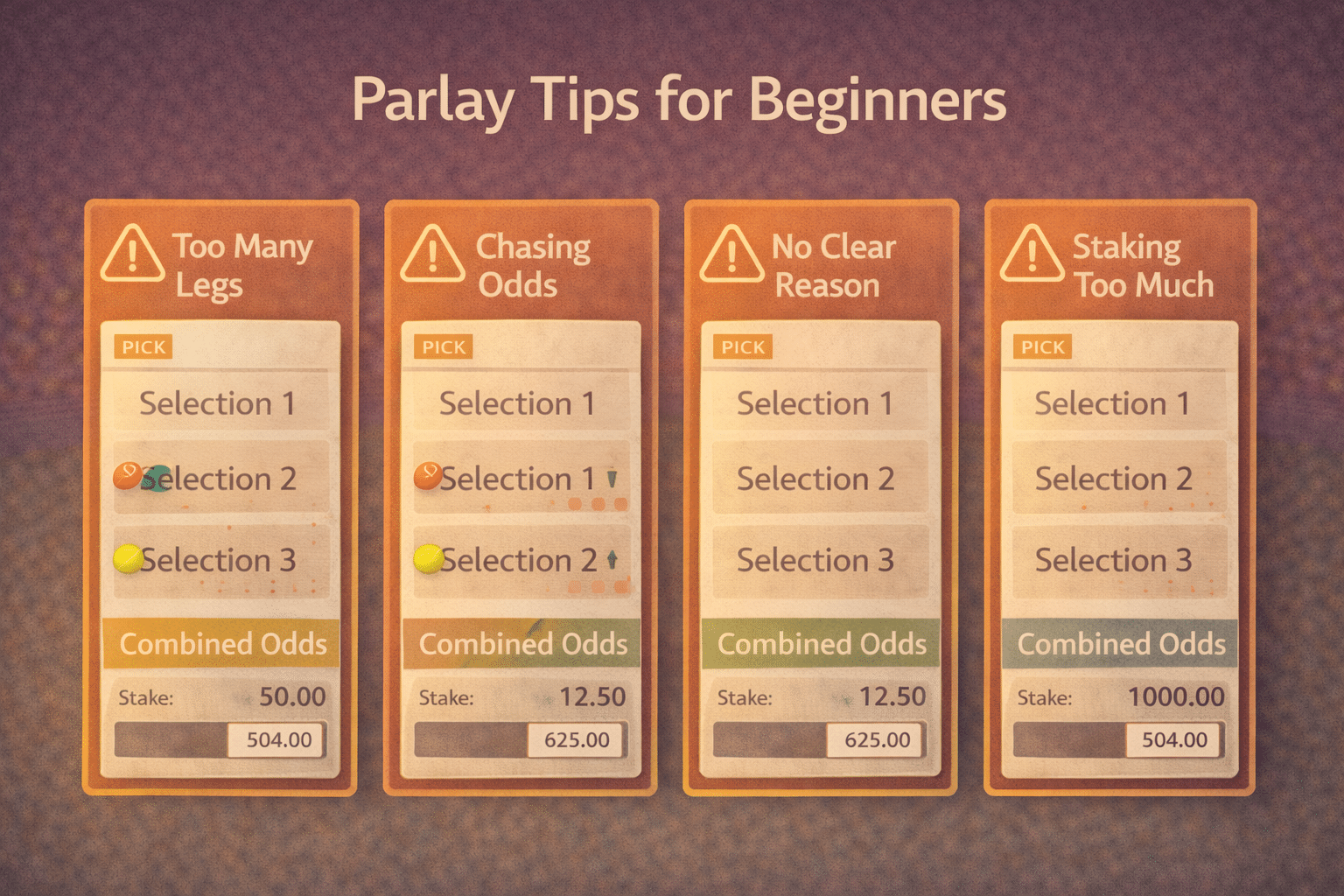
Parlays can be fun, but they’re also where a lot of people trip themselves up. If you’re new to them, a few simple habits can make a big difference to how they feel and how often they stay alive.
Keep the Number of Legs Sensible
This is the big one.
Every leg you add makes the parlay harder to land. Two or three well-thought-out selections will almost always make more sense than stacking five or six just to chase a bigger payout.
If you find yourself adding a leg purely because “it boosts the odds nicely”, that’s usually a red flag.
Know Why Each Leg Is There
A good parlay has a reason behind every selection.
If you can’t explain why you like a pick without saying “it should win”, it probably doesn’t belong in a parlay. Close games, awkward matchups, or teams with inconsistent styles are often where multis fall apart.
Confidence matters more than quantity.
Be Careful Mixing Markets in the Same Game
Same Game Parlays are popular, but they need a bit more thought.
When legs are connected, one thing going wrong can drag everything else down with it. That doesn’t mean they’re bad, just that you should think about how the game might turn if it doesn’t go exactly to plan.
If your whole parlay relies on one early goal, try, or injury not happening, you’re walking a tightrope.
Don’t Stake Like It’s a Single Bet
Parlays lose more often than singles. That’s just how they’re designed.
A common mistake is staking the same amount you would on a straight bet and then getting frustrated when multis don’t land as often. Smaller stakes tend to make multis more enjoyable and easier to live with long term.
Think of them as a higher-risk swing, not a steady grinder.
Accept That Most Parlays Won’t Get Up
This sounds negative, but it’s actually freeing.
Once you accept that parlays are meant to miss more often, the wins feel better and the losses don’t sting as much. Chasing losses or trying to “get one back” with a bigger parlay usually makes things worse, not better.
How Parlay Odds Are Calculated
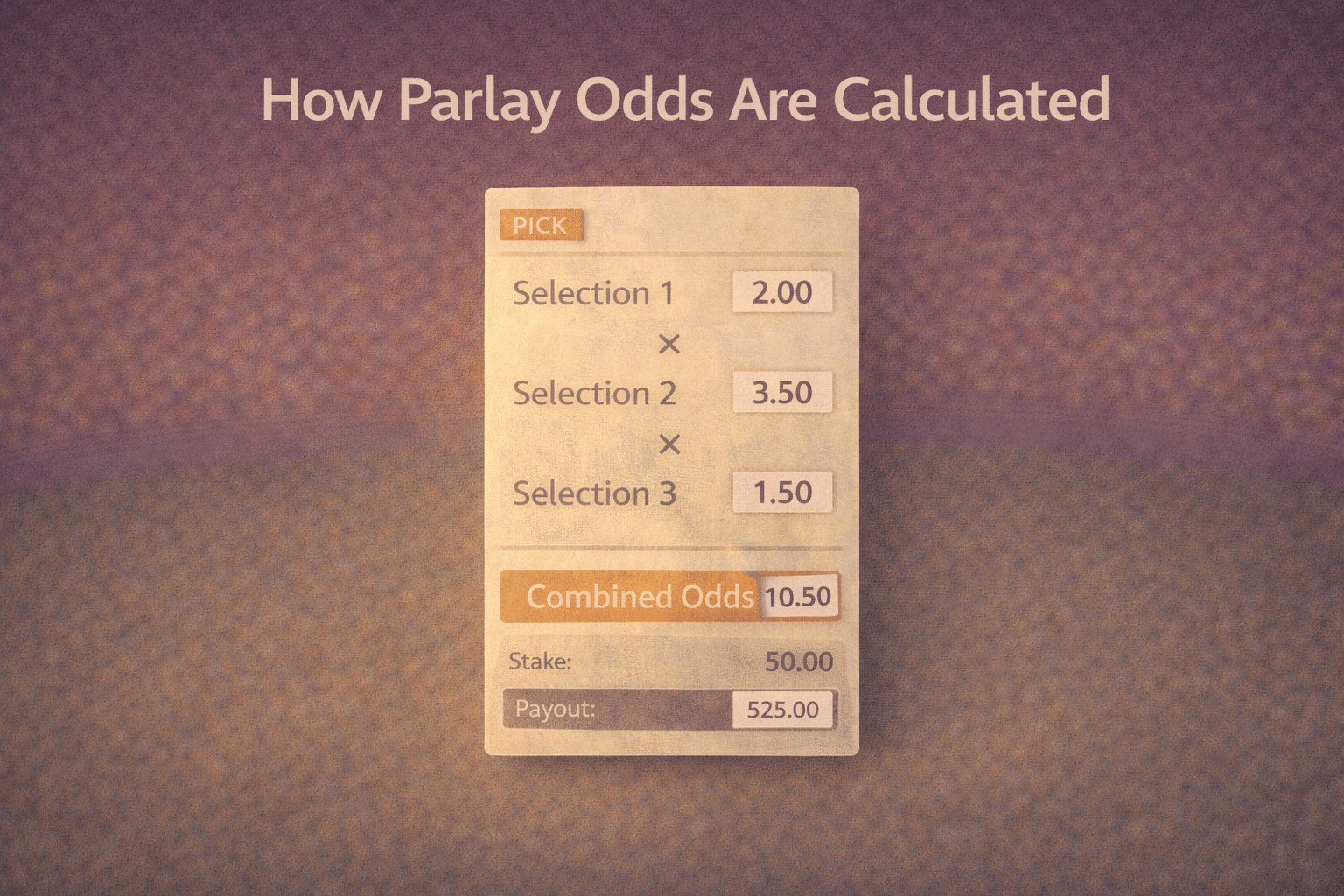
This is the part that makes parlays feel either exciting or confusing, depending on how clearly it’s explained.
At a basic level, parlay odds are calculated by combining the odds of each individual leg into one overall price. You’re not being paid out leg by leg. Everything rolls into the next result until the bet is either dead or complete.
The Simple Explanation
Each selection in a parlay has its own odds. To work out the total parlay odds, those odds are multiplied together.
So if you had something like this:
- Team A to win at 1.80
- Team B to win at 2.00
- Team C to win at 1.50
The combined odds would be:
1.80 × 2.00 × 1.50 = 5.40
That means a $10 stake would return $54 if all three legs win.
You don’t need to do this maths yourself. Bookmakers calculate it automatically. But understanding why the number jumps so quickly helps explain both the appeal and the risk.
Why the Odds Climb So Fast
Each leg makes the parlay harder to win.
Even selections that feel fairly safe on their own become much less likely once they’re chained together. The odds reflect the chance of everything going right, not just one thing.
That’s why:
- Two short-priced favourites can still create a decent payout
- Adding one extra leg can double or triple the return
- Long multis blow out to massive numbers very quickly
The payout isn’t generous for no reason. It’s simply pricing in how unlikely it is for multiple results to all land.
Decimal Odds Make This Easier in Australia
In Australia, we use decimal odds, which makes parlay maths far more straightforward than American odds.
- You multiply the odds
- Then multiply by your stake
- That final number is your total return
No conversions, no extra steps.
This is also why parlays feel more intuitive here than in some other markets. You can usually eyeball a multi and get a rough sense of whether the return makes sense.
What a Parlay Odds Calculator Does
A parlay odds calculator just automates what we’ve described above.
As you add or remove legs, the calculator:
- Updates the combined odds
- Shows your potential return instantly
- Adjusts automatically if a leg is voided
Most betting apps build this straight into the bet slip, so you’re effectively using a calculator every time you build a parlay without thinking about it.
It’s worth paying attention to how the number changes as you add legs. Watching the odds jump can be a good reminder of how much extra risk you’re taking on with each selection.
One Thing to Keep in Mind
The maths explains how parlays are priced, but not whether they’re good value.
As parlays get bigger, the true chance of winning drops faster than most people expect. That’s why huge multis look tempting but land so rarely.
Understanding the calculation doesn’t mean you should build massive parlays. It just means you know exactly what you’re trading off when you do.
When a Parlay Makes Sense vs When It Doesn’t
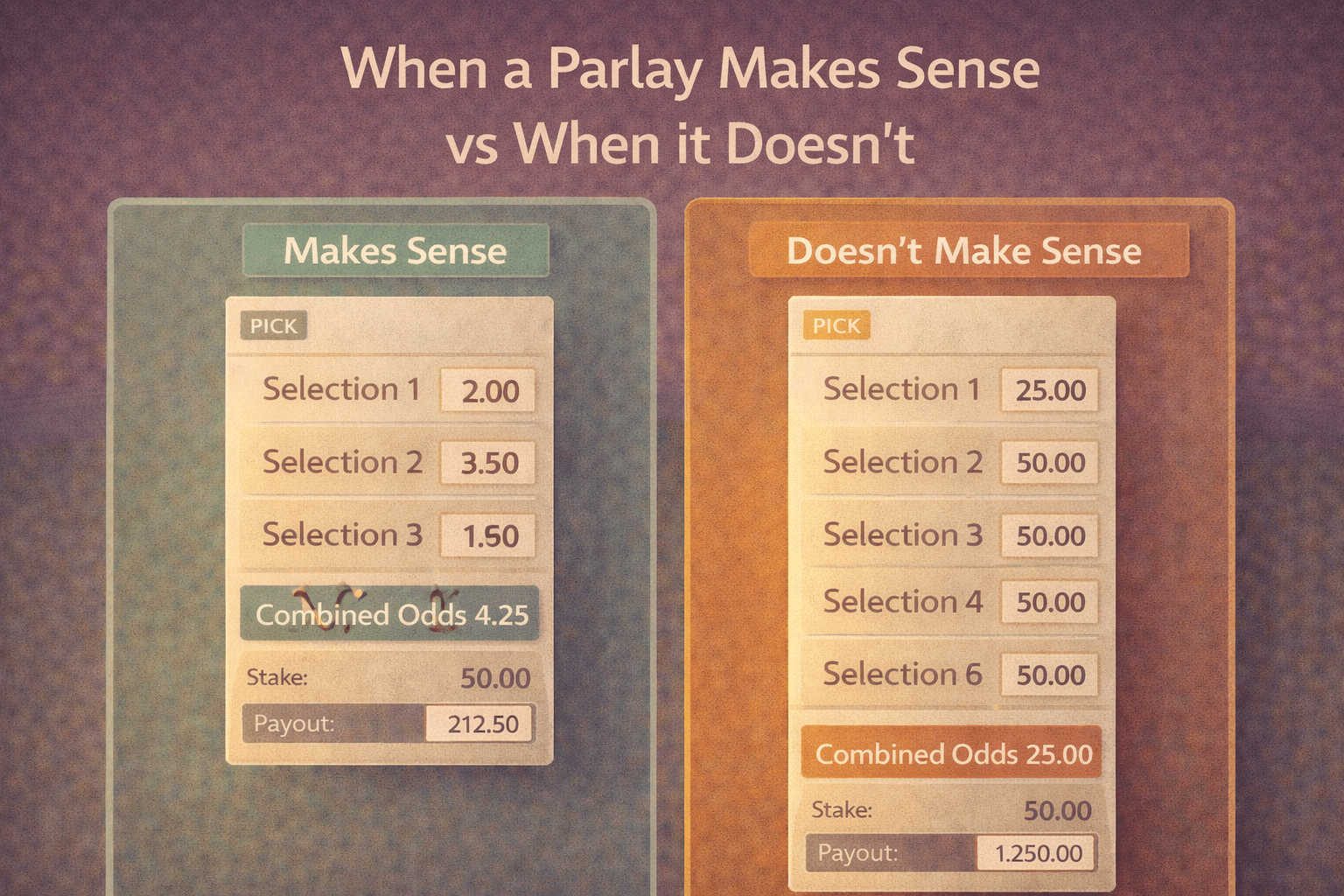
Parlays aren’t good or bad by default. They just suit certain situations better than others. The trouble usually starts when people use them out of habit rather than on purpose.
Here’s a simple way to think about when a parlay actually makes sense, and when you’re probably better off keeping things separate.
When a Parlay Makes Sense
A parlay tends to work best when you have multiple small opinions, rather than one strong one.
If you’re looking at a round of sport and thinking, “I like a few things here, but none of them feel big enough on their own”, that’s often where a parlay fits naturally.
Some common situations where parlays make sense:
- A few short-priced favourites you trust
On their own, the return isn’t very exciting. Linked together, they create a payout that feels worthwhile. - A clear read across different games
If the selections are unrelated and spread across different matches or sports, you’re not relying on one game script to carry the whole bet. - You want one stake covering the weekend
Rather than placing five or six small bets, a single parlay keeps things contained and easier to manage. - You’re betting for interest, not consistency
Parlays are great for adding some extra meaning to games you’re already watching, even if you know they won’t land often.
Used this way, a parlay is a deliberate trade. Less chance of winning, more upside if everything lines up.
When a Parlay Doesn’t Make Sense
Parlays cause the most frustration when they’re used in spots better suited to single bets.
Some red flags that a parlay probably isn’t the right move:
- You have one really strong opinion
If there’s a single game or outcome you feel genuinely confident about, tying it to other results usually just adds unnecessary risk. - You’re adding legs purely to chase a bigger payout
If the only reason a selection is in the parlay is to “boost the odds”, it’s probably doing more harm than good. - The legs rely on the same thing going right
Especially in Same Game Parlays, one early twist can knock over everything at once. - You’re trying to make back losses
Building a bigger parlay to recover from a bad run rarely ends well. That’s when risk starts compounding in the wrong direction.
In these spots, single bets usually make more sense. They win more often, settle faster, and don’t need everything else to cooperate.
A Simple Way to Decide
Before placing a parlay, ask yourself one question:
“Would I still like these picks if they were all separate?”
If the answer is yes, the parlay probably makes sense. If the answer is no, and you’re only interested because of the combined payout, it’s usually a sign to slow down.
Parlays work best when they’re built on confidence, not optimism.
What Are Parlays – Wrapping It All Up
A parlay is really just a way of linking a few bets together and accepting that they all need to land for the payout to come through. When it works, the return can feel huge. When it doesn’t, it usually only takes one result to bring everything undone.
They’re best used with intention. A handful of selections you already like, a sensible stake, and realistic expectations about how often they’ll win. Once you look at parlays that way, they stop feeling confusing or frustrating.
You don’t need to use them all the time. Think of them as a tool, not a default. When the situation suits, they can be a fun way to tie a weekend of sport together. When it doesn’t, there’s nothing wrong with sticking to simpler bets instead.
Parlay Betting FAQs
What Is a Parlay in Betting?
A parlay is a single bet that combines two or more selections into one wager. Each selection is called a leg, and all of them need to win for the parlay to pay out. If one leg loses, the entire parlay loses.
In Australia, parlays are more commonly called multis. They’re the same thing.
How Does a Parlay Bet Work?
A parlay works by rolling the odds from each winning leg into the next one. You don’t get paid as each result comes in. The bet only settles once every leg has been decided.
If all legs win, you’re paid out at the combined odds. If any leg loses, the parlay is over.
What Happens If One Leg Loses?
If one leg loses, the entire parlay loses. It doesn’t matter how many other legs have already won or how close the losing result was. Parlays are all or nothing.
What Happens If a Leg Is Void?
If a leg is void, it’s removed from the parlay. The bet continues with the remaining selections, and the odds are recalculated.
A void leg doesn’t count as a win or a loss. Common reasons include late withdrawals, abandoned events, or markets declared no bet.
Is a Parlay the Same as a Multi?
Yes. “Parlay” is the term used more often in the US, while “multi” is the term most Australians use. The structure, rules, and payouts are the same.
Are Parlays Harder to Win Than Single Bets?
Generally, yes. Because every leg needs to win, parlays have a lower strike rate than single bets. The upside is a higher potential payout if everything goes right.
Can I Mix Different Sports in a Parlay?
In most cases, yes. Many parlays include selections from different sports, leagues, or events. As long as the bookmaker allows the markets to be combined, they can sit in the same bet.
Are Same Game Parlays Riskier?
They can be. Same Game Parlays often include selections that are related to each other, which means one thing going wrong can affect multiple legs at once.
They’re not necessarily bad, but they usually require more thought than standard parlays across different games.
Why Do People Bet Parlays If They Lose More Often?
People use parlays because of the potential payout and the added interest across multiple games. They’re less about winning frequently and more about turning a few smaller opinions into one bigger swing.
As long as expectations are realistic, that trade-off makes sense for a lot of punters.