


You may be one of many bettors asking yourself how does a multi bet work? Say you’ve got a few different picks you like across the weekend. Maybe an AFL team to win, an NRL team to win, and a tennis match you feel pretty good about. A multibet is just rolling all of those into one bet slip instead of placing them separately.
The catch is simple: every leg has to land. If one goes down, the whole thing goes down.
That’s why multis can feel so good when they come off. You’re not just collecting one result, you’re stringing a few together. And because each pick gets added to the next, the potential return grows quickly. It can also fall apart just as quickly, usually because one “sure thing” decides to turn into a mess late.
In the sections below, we’ll walk through what a multi bet actually is, how the odds and returns are worked out, the different types you’ll see in Australia, and what happens when something gets voided or scratched.
What is a Multi Bet
At its core, a multi bet is just a collection of individual bets grouped together into one wager. Each selection inside it is called a leg, and they can come from different sports, different matches, or even different types of markets.
What makes a multi different from placing those bets separately is how they’re linked. Every leg depends on the one before it. As each result comes in at the best betting sites, the odds roll over into the next leg, which is why the potential payout can grow so quickly.
The trade-off is obvious once you think about it. With a single bet, you only need one thing to go right. With a multi, you need everything to go right. One losing leg wipes out the entire bet, even if the rest of your picks are spot on.
That balance between risk and reward is the whole appeal. Multis let you take a handful of outcomes you already like and bundle them together, knowing you’re giving up safety in exchange for a bigger possible return.
When you see people talking about “having a multi on for the weekend”, this is what they mean. A few results, all riding on each other, with the hope they line up just right.
How Multi Bets Work in Practice

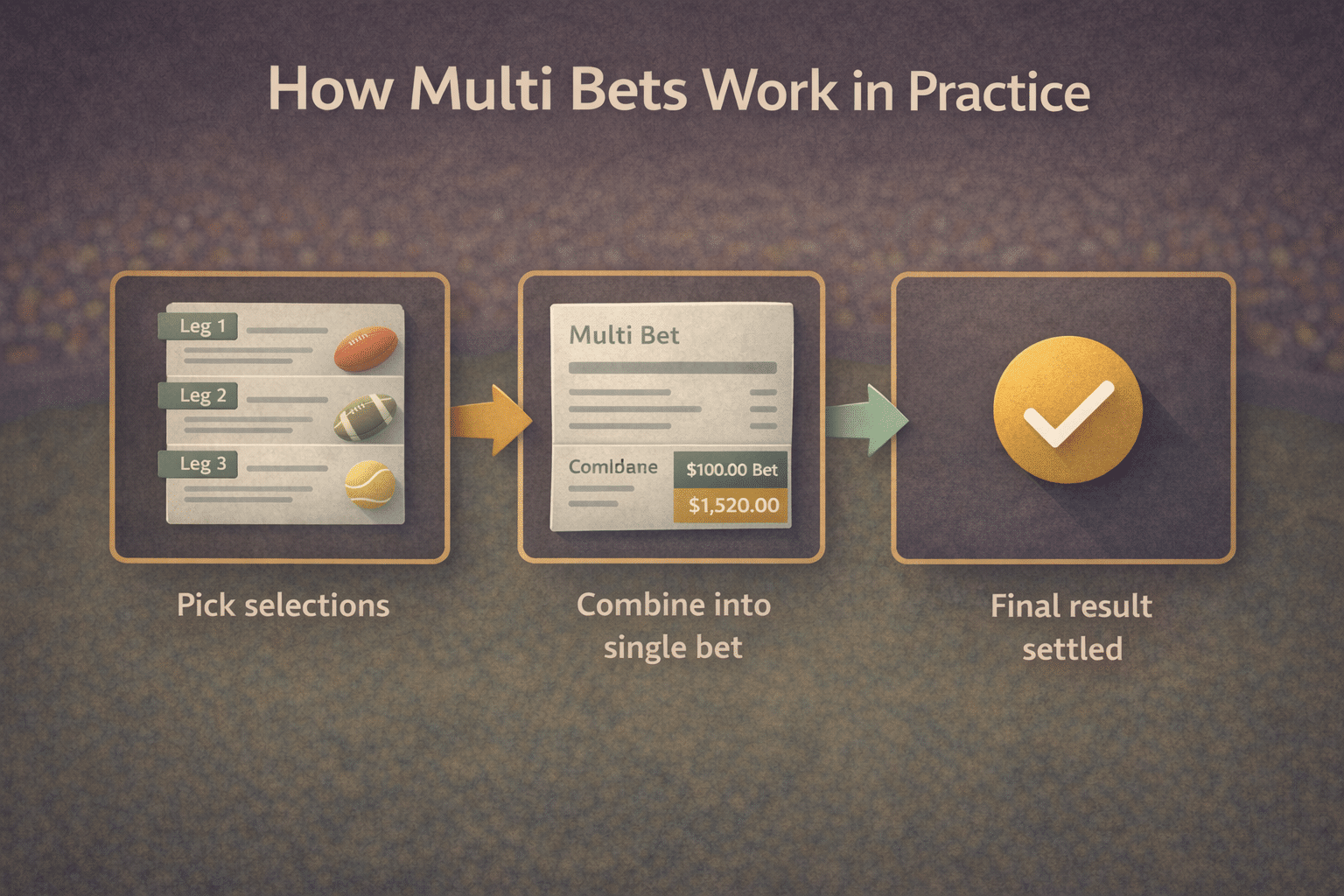
Here’s what’s actually happening behind the scenes when you place a multi. Think of it as one bet that gets “reinvested” from leg to leg as results come in.
- You pick two or more selections – These selections are your “legs”. They can be from different matches, sports, or markets, depending on what’s allowed.
- All legs are linked together into one wager – You’re not placing separate bets anymore. You’ve bundled everything into a single bet slip.
- The odds are combined into one overall price – The multi price is worked out by combining the odds across all legs, which is why the number can climb quickly as you add more selections.
- Each leg needs to win for the multi to stay alive – When a leg wins, it doesn’t pay out on its own. It simply keeps the multi going to the next leg.
- If one leg loses, the whole multi loses – Even if the other legs win, one losing result wipes out the entire wager.
- If every leg wins, the multi pays out once at the end – You only get the return when the final leg is settled and everything in the multi has landed.
If you’ve ever heard someone say they’ve “got a multi running” for the weekend, this is what they mean. A bunch of results all tied together, and everything has to go right for it to get up.
Why Multi Bets Pay More
Multi bets pay more because you’re stacking outcomes on top of each other instead of betting on them one at a time.
With a single bet, you’re only being paid for one thing to happen. With a multi, every leg adds another layer of difficulty. The bookmaker isn’t just pricing one result anymore, they’re pricing the chance of all of them landing together.
Each time you add a leg, you increase the risk. Even selections that feel safe on their own start to look less certain once they’re tied to others. That extra risk is what pushes the potential return higher.
This is also why the jump in payout can feel dramatic. Two or three short-priced favourites might not look exciting individually, but once they’re combined, the odds climb much faster than most people expect.
It’s important to remember that the higher return isn’t a bonus or a trick. It’s simply the reflection of how unlikely it is for multiple results to all go your way at the same time.
Common Types of Multi Bets
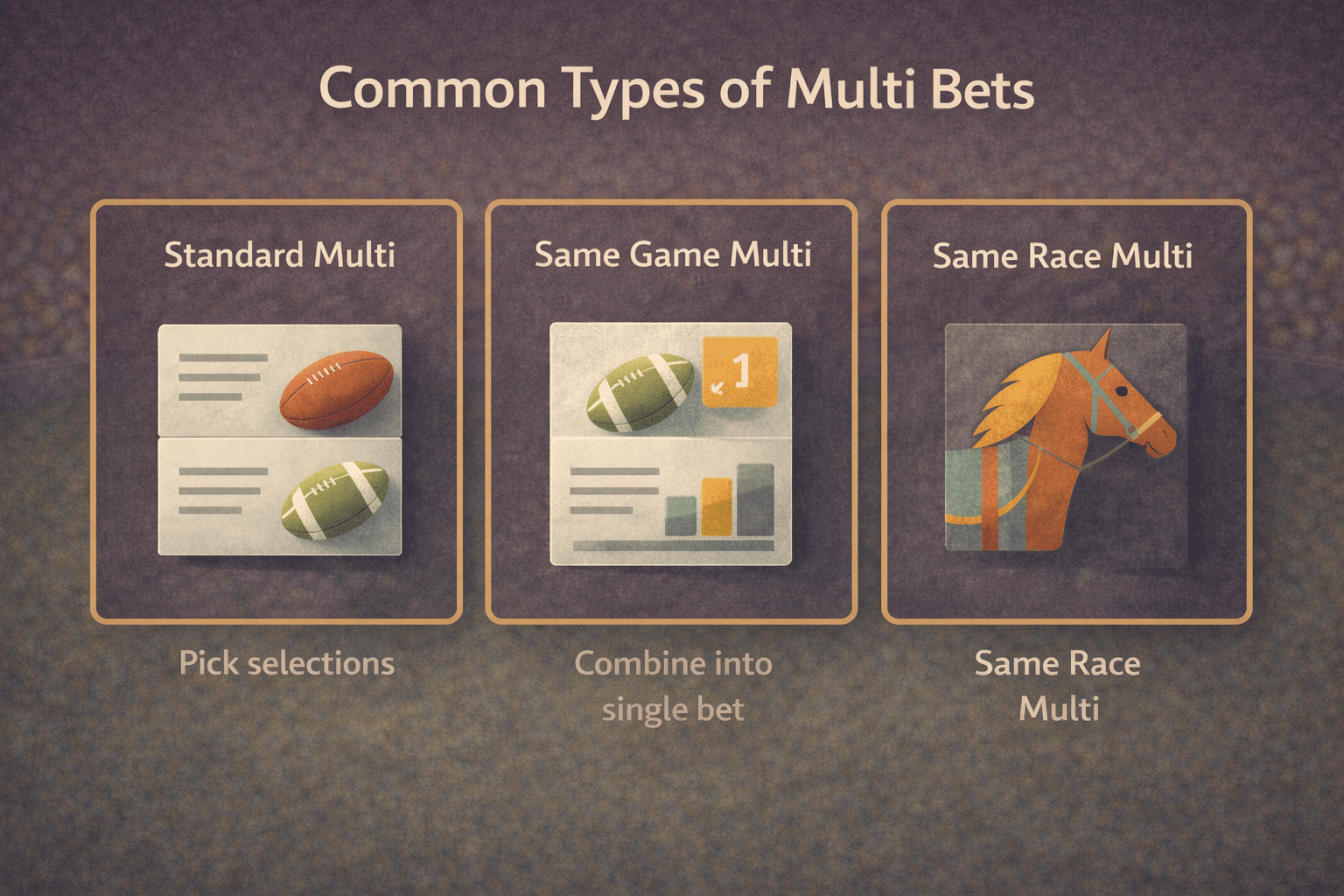
Once you get the basic idea of how a multi works, you’ll start noticing there are a few different ways they’re put together. Most multis you see fall into one of these buckets.
Standard Multis
This is the most straightforward type. A standard multi is just a handful of selections from different games or events, all linked together.
For example, you might back an AFL team to win on Friday night, an NRL team on Saturday, and a tennis match overnight. None of those games have anything to do with each other, but they’re all tied together in the same bet.
Standard multis are usually where people start because they’re easy to understand. Each leg stands on its own, and the only rule is that they all need to win.
Same Game Multis
A Same Game Multi is exactly what it sounds like. All of the legs come from the same match.
Instead of just backing one team to win, you might combine a few things you expect to happen in that game. For example, you could have a team to win, a certain player to score, and the total points to go over a set number.
These can be appealing because you’re building a story around how you think the game will play out. The trade-off is that the legs are often related, which is why odds are adjusted compared to a standard multi.
Same Race Multis
Same Race Multis work the same way, but they’re used in racing rather than sport.
All of the selections come from one race. That might mean picking a horse to win, another to place, and maybe a third to finish in the top four. Because those outcomes are connected, the odds are calculated differently to a normal multi.
You’ll mostly see Same Race Multis in thoroughbred and greyhound racing, and they’re popular with people who like having a few opinions in the same race rather than spreading bets across the day.
Quick Comparison of Common Multi Bet Types
If you’re more of a visual person, it can help to see how the main multi types compare side by side. The table below gives a quick snapshot of where each one fits and how they’re usually used.
| Multi bet type | Where selections come from | How it’s usually used |
| Standard multi | Different games or events | Linking a few separate results across a round or weekend |
| Same Game Multi | One match only | Building a bet around how you think a single game will play out |
| Same Race Multi | One race only | Combining multiple outcomes in the same race |
What Happens When a Leg Loses or Is Void
This is one of the first things people want to know once they start using multis, because it’s also where most of the confusion comes from.
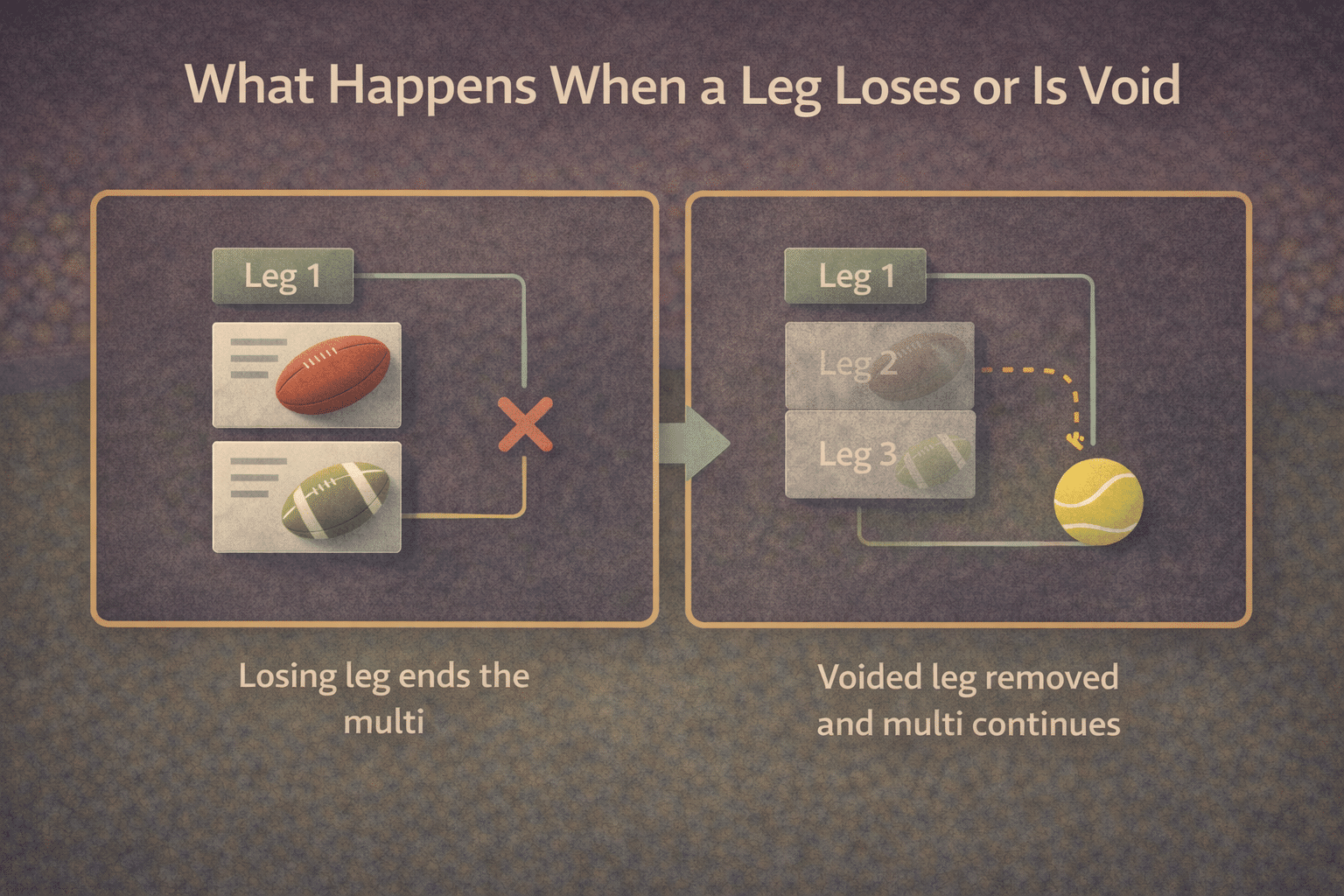
If a leg loses, the multi is finished. It doesn’t matter how many other selections have already won or how close the losing leg was. One losing result wipes out the entire bet.
Voids work differently.
If a leg is void, it’s simply removed from the multi. The rest of the bet stays alive, just with one fewer selection. The overall odds are recalculated based on the remaining legs, and the multi carries on as if that voided pick was never there.
Voids usually happen when something is taken out of your control. A player is ruled out before the match starts, a race is abandoned, or a market is declared no bet. It’s not treated as a win or a loss, just a non-event.
This is why people sometimes think a multi has “changed” after they place it. The bet itself hasn’t been altered, but the structure has adjusted because one leg no longer counts.
The important distinction is simple:
- A losing leg kills the multi
- A void leg shrinks the multi
Once you understand that difference, multis become much easier to follow, especially when something unexpected happens before or during a game.
Why People Still Use Multi Bets
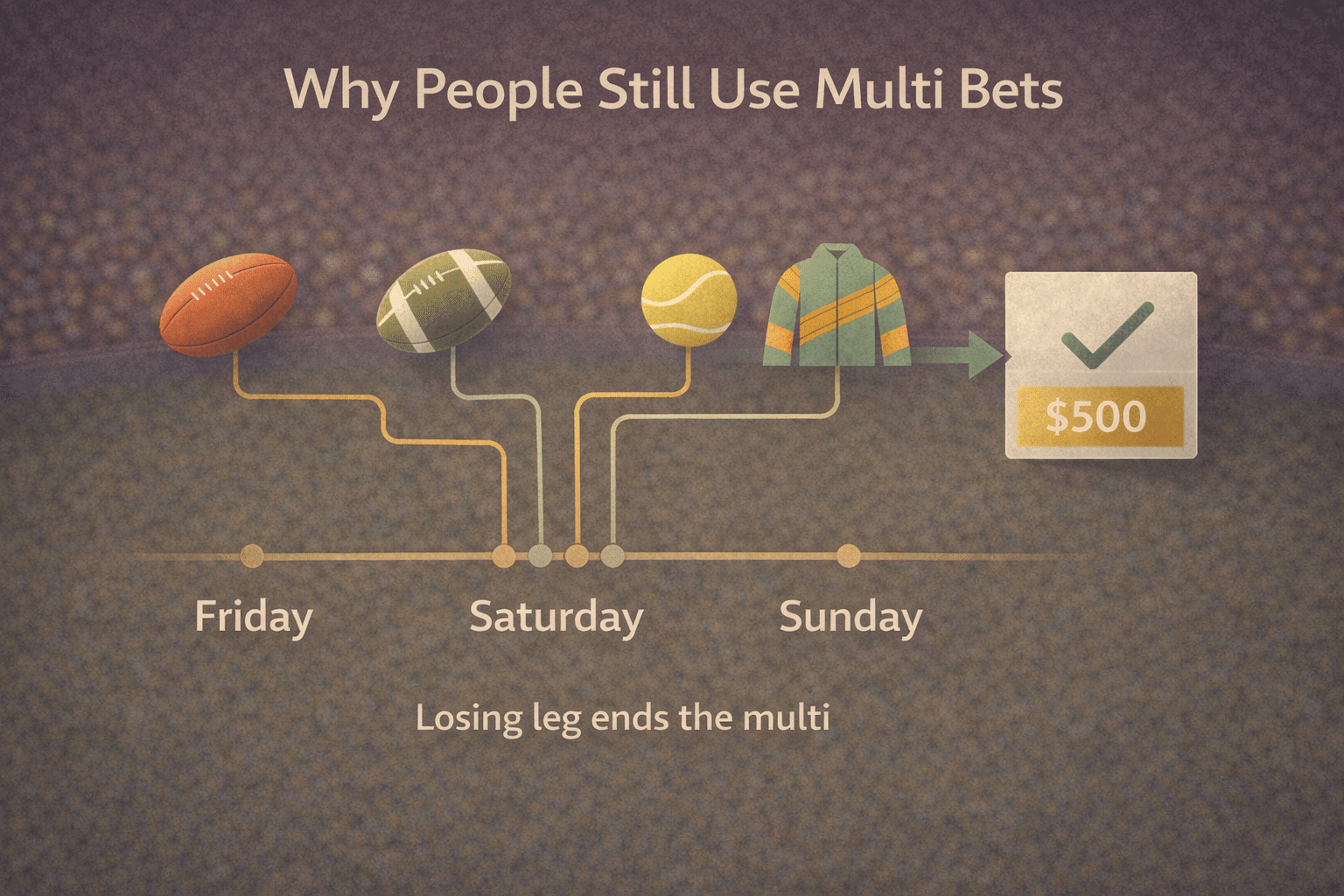
On paper, multis don’t make much sense. You’re asking more things to go right, which lowers your chances overall. And yet, they’re still one of the most popular ways people bet on sport.
Here’s why.
1. The Appeal of Bigger Returns
The most obvious reason is the upside. Multis turn a few small opinions into something that feels worthwhile.
A couple of short-priced favourites on their own might not be very exciting. Link them together, and suddenly the return looks a lot more interesting. You’re accepting extra risk in exchange for the chance of a bigger payout.
2. Having Interest Across the Weekend
Multis also fit neatly into how people follow sport in Australia. Instead of focusing on one game, you’ve got something riding on multiple matches across a round or a weekend.
An early win builds momentum. A late game suddenly matters more than it otherwise would. Each result feeds into the next, which keeps people engaged for longer.
3. One Bet Instead of Many
For some people, multis feel like a way of keeping things contained.
Rather than placing several separate bets, you put one stake down and live with the result. You know exactly what you’ve risked, and you’re comfortable trading a lower strike rate for a bigger potential return.
That balance is really what it comes down to. Multis aren’t about being safer. They’re about choosing a different mix of risk, reward, and involvement.
Common Multi Bet Mistakes
Multis are easy to understand once you’ve used them a few times, but there are still a few traps that people fall into regularly. Most of them come from overconfidence rather than bad luck.
1. Adding legs just to boost the odds
This is probably the most common one. Someone likes a multi but feels the payout isn’t big enough, so they throw in an extra leg without really loving it.
Every leg you add increases the risk. A pick that feels “safe enough” can end up being the one that brings everything undone. Multis work best when every selection has a clear reason for being there.
2. Treating a multi like a single bet
It’s easy to forget that multis behave very differently to single bets. A team that’s good enough to win might not be good enough to do it comfortably. A game that looks straightforward can turn scrappy.
When people build multis without thinking about how each game might actually unfold, they often end up surprised by results that, in hindsight, weren’t that strange.
3. Ignoring how legs relate to each other
This comes up a lot with Same Game Multis. Markets inside the same match aren’t independent, even if they look that way at first glance.
If one thing goes wrong early, it can affect everything else you’ve tied to it. That doesn’t mean Same Game Multis are bad, just that they need a bit more thought than standard ones.
4. Expecting multis to win often
Multis don’t land regularly, especially as they grow in size. That’s normal.
People get frustrated when a few don’t come off in a row, even though that’s exactly how they’re designed to behave. Once you accept that multis are higher risk by nature, the wins tend to feel better and the losses make more sense.
Multi Bets vs Single Bets
At some point, most people end up comparing multis to single bets, even if they don’t realise it. The two work very differently, and neither is really better or worse. They just suit different situations.
How Single Bets Work
A single bet is as straightforward as it gets. You back one outcome, and that’s all that needs to happen.
If it wins, you get paid. If it loses, you move on. There’s no compounding, no flow-on effects, and no other results to worry about. It’s simple and predictable, which is why a lot of people start here.
Singles suit people who have one strong opinion and don’t want anything else interfering with it.
What Multis Change
Multis take that same idea and stretch it out. Instead of one opinion, you’re backing a handful at once, knowing they all need to line up.
The upside is obvious. The return can be much bigger than any of the individual bets on their own. The downside is just as clear. One mistake, one surprise result, and the whole bet is gone.
Choosing Between the Two
In practice, most people don’t choose one or the other permanently. They switch depending on how they see a round shaping up.
If there’s one game you feel strongly about, a single bet often makes more sense. If there are a few matches you like but don’t love enough to back individually, a multi can feel like a better fit.
Understanding the difference helps set expectations. Singles win more often. Multis win less often, but feel bigger when they do.
Multi Bets vs Single Bets at a Glance
If you’re deciding between a multi and a single bet, it can help to see the differences laid out plainly. This isn’t about which one is “better”, just how they behave once you place them.
| Feature | Single bet | Multi bet |
| Number of selections | One outcome | Two or more outcomes |
| How often they win | More often | Less often |
| Potential return | Lower | Higher |
| Risk level | Lower | Higher |
| How they feel | Simple and direct | More suspense, more moving parts |
| Best suited for | One strong opinion | A few smaller opinions at once |
Multibets: Final Thoughts
Multi bets aren’t complicated once you understand what’s actually going on. They’re just a way of linking a few selections together and accepting that everything needs to line up for the bet to win.
They’re not safer than single bets, and they’re not meant to be. The appeal is in the trade-off. You’re giving yourself a lower chance of winning in exchange for a bigger potential return and a bit more interest spread across your sport.
If you’re clear on how multis work, what happens when things go wrong, and why the payouts look the way they do, they stop feeling confusing. From there, it’s simply a matter of deciding when a multi makes sense and when it doesn’t.
Multi Bet FAQs
What is a multibet?
A multibet is a single bet made up of two or more selections, all linked together. Each selection is called a leg, and every leg needs to win for the bet to pay out. If one leg loses, the entire multibet loses.
How do multi bets work?
Multi bets work by rolling the odds from one winning selection into the next. Instead of being paid out after each result, the bet stays open until every leg is settled. If they all win, the combined odds determine the final return.
What happens if one leg loses?
If any leg in a multi loses, the whole bet is over. It doesn’t matter how many other legs have already won or how close the losing result was. One loss wipes out the multibet.
What happens if a leg is void?
If a leg is void, it’s removed from the multibet. The bet continues with the remaining legs, and the odds are recalculated accordingly. A void leg doesn’t count as a win or a loss.
Is a multi bet the same as a parlay?
Yes. “Parlay” is the term commonly used in the United States, while “multibet” or “multi” is the term most Australians use. They describe the same type of bet.
Are multi bets harder to win than single bets?
Generally, yes. Because every leg has to win, multis have a lower strike rate than single bets. The trade-off is that the potential return is higher if everything goes your way.
Can I mix different sports in a multi?
In most cases, yes. Many multis include selections from different sports, leagues, or events. The key thing is that all selections are tied together in one bet.
Are same game multis riskier?
They can be. Same Game Multis often involve selections that are related to each other within the same match. If the game doesn’t play out the way you expect, multiple legs can fall over at once.
Why do people use multi bets if they lose more often?
People use multis because of the potential payout and the added interest they bring across multiple games. They’re less about winning often and more about turning a few smaller opinions into one bigger swing.